
Last updated October 31, 2026
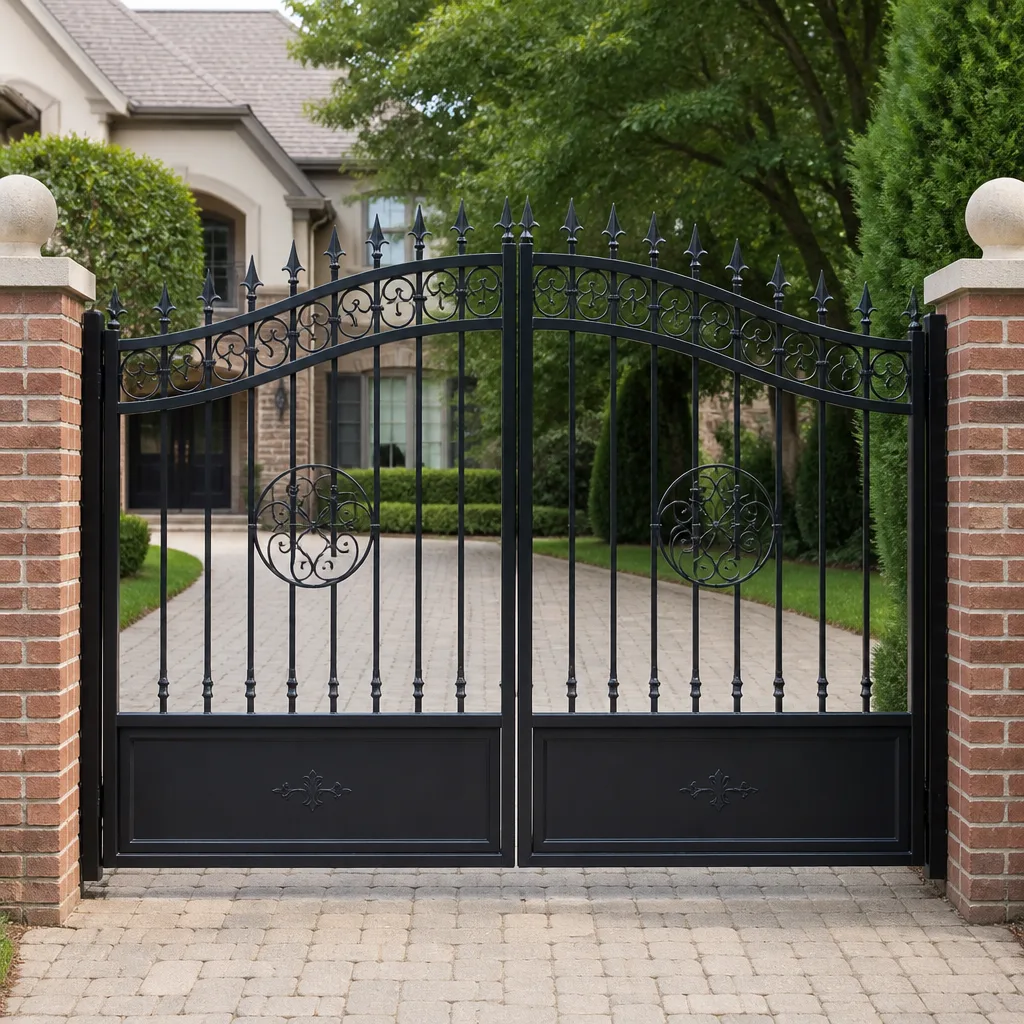 Wrought iron
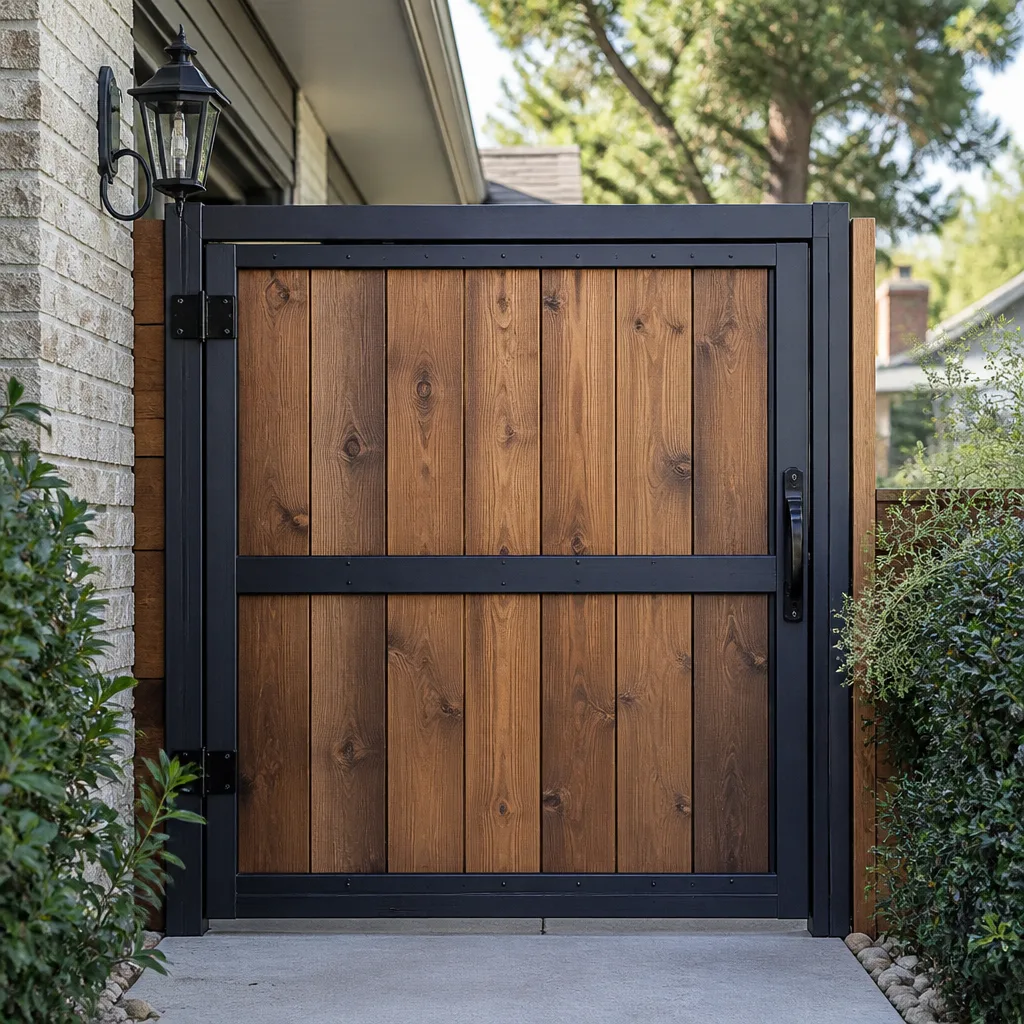 Wood & steel frame
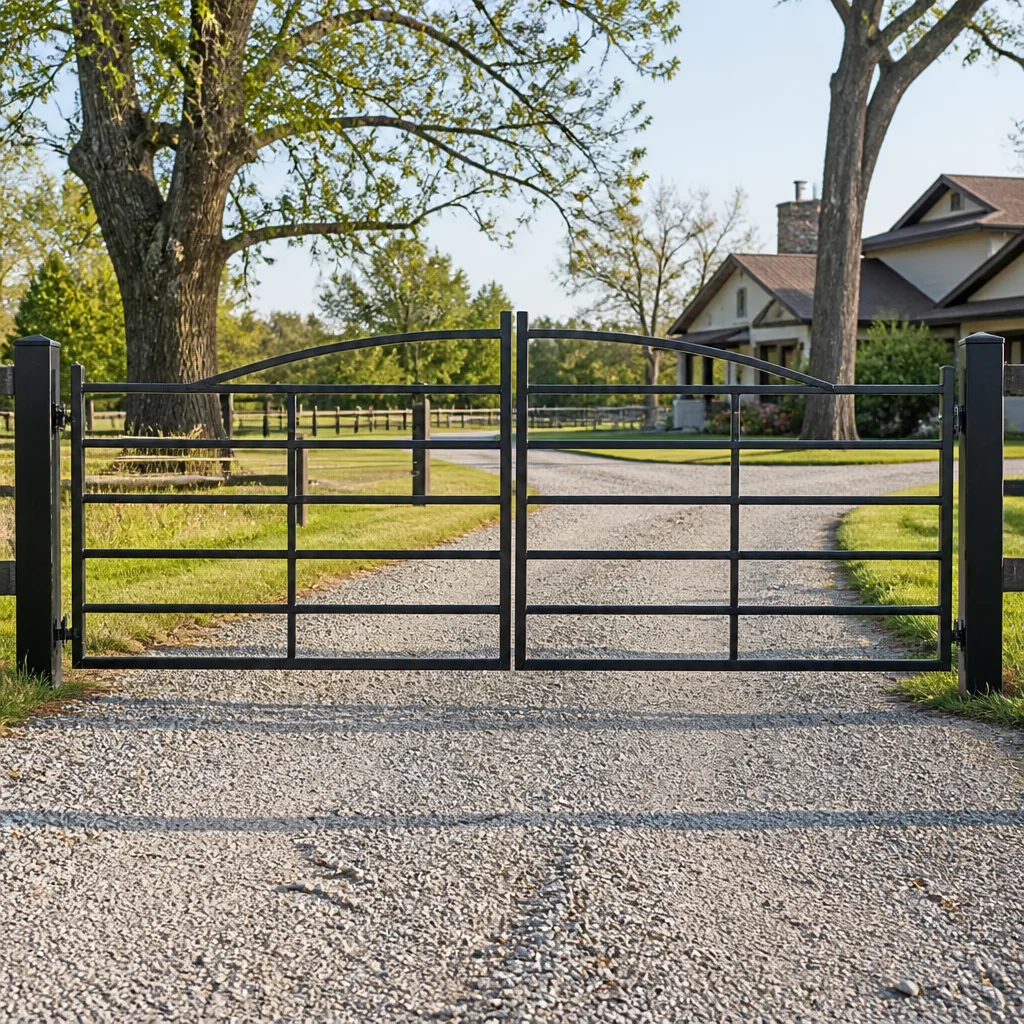 Farm & ranch
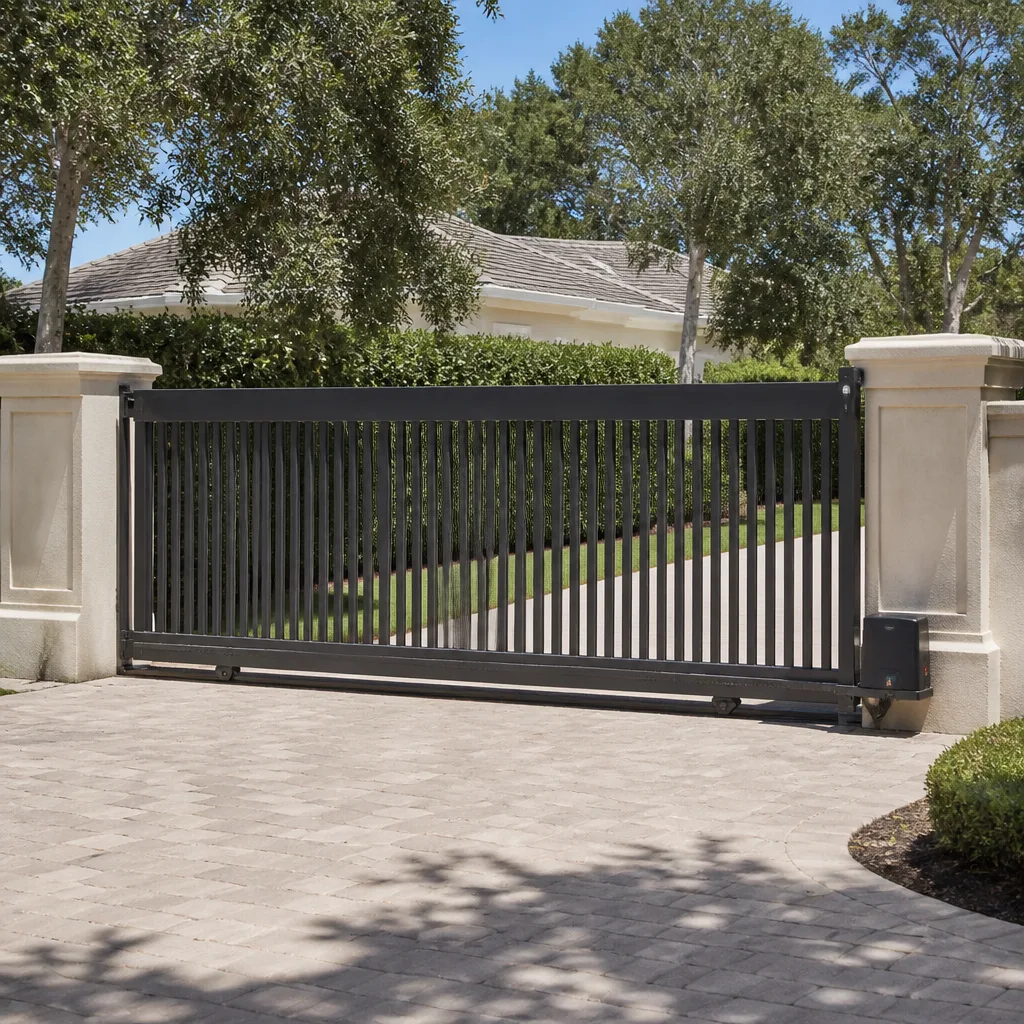 Sliding driveway gates
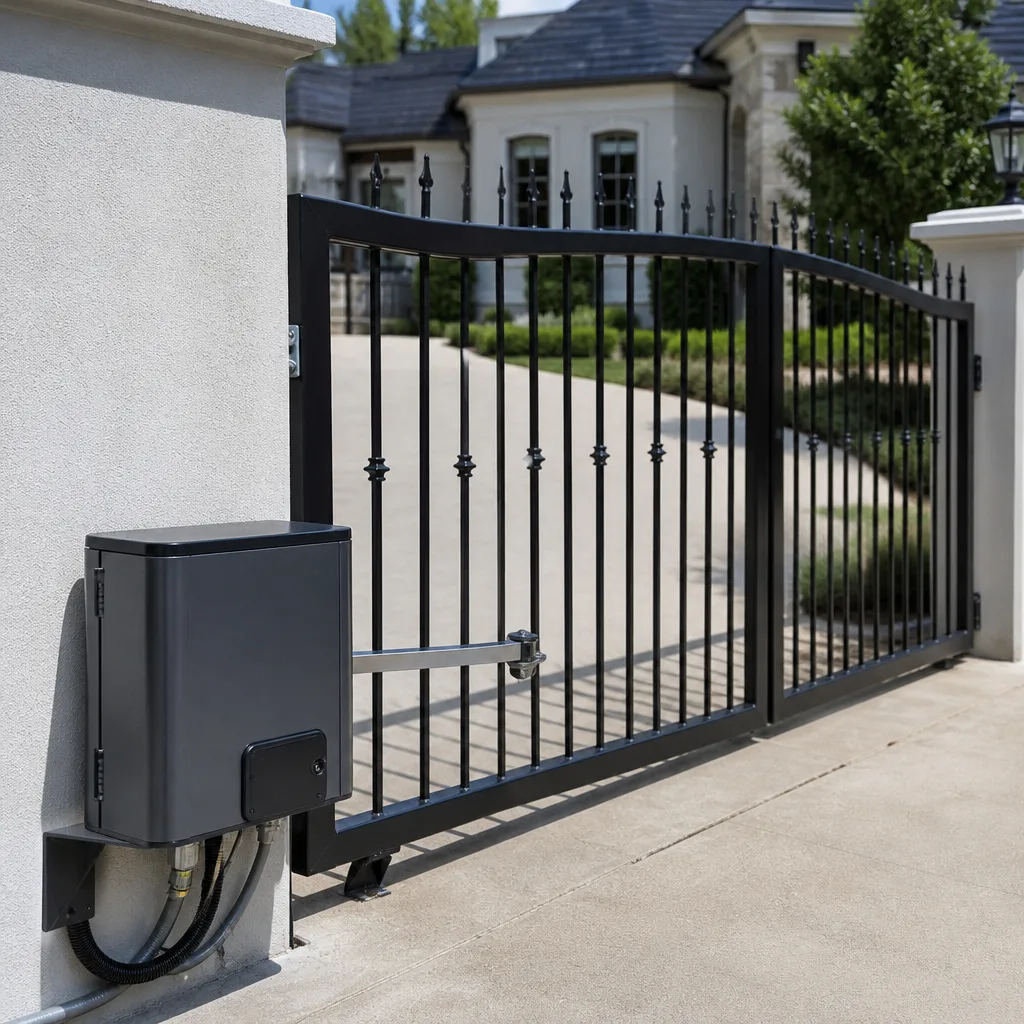 LiftMaster operators
Free on-site gate assessment - hinges, posts, and your LiftMaster or Nice gate operator checked before anything is quoted
The assessment is free and the quote is the invoice.
Get your free estimateGate Repair Warning Signs: A Fontana Homeowner’s Reference Guide
A gate that reverses direction without completing its cycle isn’t malfunctioning – it’s accurately reporting an obstruction or torque problem. Most homeowners override this behavior for months before realizing it was a diagnostic signal, not a glitch. This guide teaches you to read your gate the way a Fontana technician does, by watching how it behaves under load, listening to what it says when it starts and stops, and noticing the small changes that accumulate into expensive failures. By the time you reach the end, you’ll know which warning signs mean “schedule service this week” and which mean “shut the gate down and call today.”
Styles & brands we work with
Quick Answer
The most common gate repair warning signs in Fontana are: slow or labored opening, a gate that reverses mid-cycle, grinding or metallic popping from the operator or hinges, sagging at the latch end, and intermittent failure that comes and goes. Any one of these means the system is speaking to you – and the longer you wait, the more likely a $200 hinge repair becomes an $1,800 operator replacement. If your gate hesitates, groans, or doesn’t close fully on the first try, call (844) 703-6053 for a professional assessment before a small issue becomes a full gate repair in Fontana.
Table of Contents
- Mechanical Warning Signs vs. Electrical Warning Signs: How to Tell Them Apart
- Why Intermittent Failures Are More Serious Than Consistent Ones
- Fontana-Specific Warning Sign: Dust Accumulation on Drive Assemblies
- The Sounds Your Gate Makes and What Each One Means
- Isolated Component Failure vs. System-Level Imbalance
- A 10-Minute Visual Inspection Any Fontana Homeowner Can Do
- Common Mistakes to Avoid
- When to Call a Professional
- Frequently Asked Questions
- The Bottom Line
Mechanical Warning Signs vs. Electrical Warning Signs: How to Tell Them Apart
Before you touch anything, learn to categorize what you’re seeing. Gate problems fall into two broad families, and confusing them leads to wasted time, wrong parts, and repair attempts that make things worse. The behavioral patterns give you the answer without opening a single panel.
Mechanical warning signs are visible and physical. You can see a gate leaning, hear metal contacting metal, or feel resistance in the track. These issues live in the physical world: hinges, rollers, tracks, wheels, posts, and the gate’s own weight distribution. A mechanical problem builds gradually. The gate opens a little slower each week. The sag at the latch end grows by a quarter-inch over a season. You’ll see the gate lean forward slightly before you hear anything.
Electrical warning signs are behavioral and inconsistent. The gate opens fine for three days, then refuses to respond for an hour. The operator hums but nothing moves. The gate closes halfway, stops, and reopens for no visible reason. Photoelectric sensors flash error codes. The keypad works from the driveway but not from the street. These are signs that the control board, limit switches, safety sensors, or power supply are degrading.
Here’s the distinction that matters most:
- Mechanical problems get worse every cycle. Each open and close physically wears the misaligned part further. You will see and hear the decline.
- Electrical problems are intermittent by nature. They depend on temperature, moisture, voltage fluctuation, and component heat. They appear and vanish, which makes them the ones homeowners wrongly dismiss.
In Fontana, where summer temperatures routinely exceed 100°F, electrical failures cluster in afternoon peak heat. Control boards overheat. Capacitors drift out of spec. Solar-charged battery systems lose voltage under load. If your gate fails most often between 2 p.m. and 6 p.m. in July and August, you’re looking at an electrical issue even if the symptom looks mechanical – like a motor that won’t turn because the capacitor can’t deliver starting torque in high ambient temperatures.
Multi-brand exposure makes this distinction clearer. We work on the brand you already have, whether it’s a LiftMaster operator on a residential swing gate or a BFT hydraulic unit on a light-commercial slide gate, and the failure signatures differ by platform. A Mighty Mule that won’t hold a charge tells us a different story than a FAAC that trips its thermal overload. The mechanical versus electrical framework is your first diagnostic tool, and it costs nothing to use.
Why Intermittent Failures Are More Serious Than Consistent Ones
Here’s the counterintuitive truth that saves Fontana homeowners thousands: a gate that fails every time is easier to fix than a gate that fails sometimes. Consistent failure points to a single, identifiable cause. Intermittent failure points to a system that is deteriorating in ways that will cascade.
When a gate “works most of the time,” one of these is usually happening:
- A limit switch is drifting. Limit switches tell the operator where “open” and “closed” are. As they wear, they send inconsistent signals. Sometimes the gate closes fully. Sometimes it stops three inches short and reverses. The switch isn’t dead yet – it’s fading, and every cycle advances the fade.
- A capacitor is losing microfarads. Capacitors store the starting charge for gate motors. They fail gradually. At 90 percent of rated capacitance, the motor starts every time. At 70 percent, it starts most mornings but struggles on cold nights or hot afternoons. At 50 percent, it fails intermittently. The homeowner perceives randomness. The technician sees a curve trending to zero.
- A wire connection is corroding. Fontana’s low humidity slows corrosion compared to coastal cities, but irrigation overspray, soil moisture, and temperature cycling still degrade splice connections over years. A corroded connection passes voltage sometimes and drops it other times. The gate works when the wire is cool, fails when it’s hot or vibrating.
- A gear is partially stripped. The operator’s internal gear teeth wear unevenly. The gate moves until the stripped section engages, stalls, and reverses. It feels intermittent to the homeowner because the gate only fails when the gear lands on the damaged teeth.
All four of these follow the same arc: a long period of mostly-working, a shorter period of sometimes-working, and a sudden transition to not working at all. The failure that looks random is actually deterministic. It’s counting down cycles, and every cycle that happens while the component is degraded accelerates the damage.
The financial consequence is straightforward. A drifting limit switch is a $120 part and an hour of labor. The stripped gear that results from ignoring it for six months is a full operator replacement at $900 to $1,800 depending on the brand and drive type. Intermittent failures are not “minor because they’re occasional.” They’re early-stage, and early is when repairs are cheapest.
If your gate fails once a week but works the other six days, the failure isn’t going away. It’s rehearsing. And in our experience with electric gate systems across Fontana’s varied housing stock – from the estate-sized properties north of the 210 to the gated communities in the Southridge area – the “it only does it sometimes” call is the one that most often ends with the homeowner saying, “I wish I’d called sooner.”
Fontana-Specific Warning Sign: Dust Accumulation on Drive Assemblies
Fontana sits at the eastern edge of the San Bernardino Valley, where the Santa Ana winds and the area’s natural aridity produce a specific kind of dust: fine, alkaline, and abrasive. It’s not the coastal marine layer dust of Newport Beach or the agricultural soil of the Central Valley. It’s a mineral dust that works its way into gate machinery and acts as a slow-grinding compound.
Here’s what dust accumulation looks like at the point it starts causing damage, versus before it does:
Before damage (cosmetic accumulation): A thin, even coating of dust across the operator housing, the top of the gate frame, and the exposed portions of the chain or belt. You can wipe it off with a dry rag. The gate moves normally. The dust sits on surfaces but hasn’t penetrated seals or mixed with lubricant.
At the damage point (abrasive accumulation): Dust is no longer a coating but a paste. You’ll see dark, greasy buildup around sprockets, pulleys, and bearing housings. The dust has mixed with the factory lubricant to form a grinding slurry. The gate moves with a dry, gritty sound – not a squeal, but a low grind. You may see accelerated wear on the chain and sprocket teeth: the edges of the teeth look polished or rounded rather than machined. On slide gates, the V-track develops a groove that wasn’t there six months ago. On swing gates, the hinge pins show radial scoring.
The difference between the two stages is lubricant contamination, and that’s the warning sign to watch for. Clean dust is harmless. Dust that has changed the color and texture of your gate’s lubricant is actively machining metal. In Fontana, with our wind patterns and low rainfall to wash surfaces clean, this contamination cycle happens faster than homeowners expect.
We recommend a visual check of the drive assembly every spring, right after the windy season peaks. Look at the chain or belt. Look at the grease around the hinges. If you see paste instead of clean lubricant, the clock has started. A professional cleaning and re-lubrication of the drive components is a minor service item – typically under $200. A replacement gear set or sprocket assembly runs materially higher.
For properties near the northern foothills or the equestrian zones south of Jurupa Hills, dust also carries organic material. Manure dust, decomposed granite, and windblown plant matter add to the abrasive load. HOA communities with decomposed granite landscaping features see this more than others. If your property generates dust when you walk across the driveway, your gate is breathing that same dust every cycle.
The Sounds Your Gate Makes and What Each One Means
Sound is the most underused diagnostic tool a homeowner has. You don’t need a stethoscope or a vibration analyzer. You need to know what normal sounds like for your specific gate, and then notice when normal changes.
Squeaking or light metallic rubbing: This is the most common sound we hear about on calls across Fontana. A squeak means metal-on-metal contact where lubrication has failed. It’s usually a hinge pin on a swing gate or a roller on a slide gate. The fix is simple and inexpensive if caught early. Left alone, the squeak becomes a grind, the grind becomes a groove, and the groove becomes a replaced hinge or roller. Squeaking is a deferred maintenance signal – schedule it, but don’t panic.
Hesitation before movement: When you press the remote and there’s a pause of one to two seconds before the gate responds, that’s not the operator thinking. That’s a starting system that’s struggling. It could be a capacitor straining, a voltage drop in the supply line, or a motor fighting increased resistance from worn mechanical parts. Hesitation is early electrical stress. It means the system is working harder than it was designed to, and it won’t reverse course on its own.
Grinding or crunching: Different from a squeak. Grinding is low, continuous, and sounds like metal being chewed. It means parts are making contact that shouldn’t be – gear teeth hitting where they don’t belong, a chain running against a worn guide, a wheel dragging on a misaligned track. Grinding indicates active material loss happening on every cycle. This is not a schedule-it signal. This is a stop-using-it signal. Every cycle is removing metal that cannot be put back.
Metallic popping or snapping: This is the sound that triggers an immediate call from the technicians at Manor Gate Repair. A pop or snap under load means something is yielding – a gear tooth breaking, a weld developing a crack, a chain link separating, a spring letting go a fraction of an inch. On gates with tension springs, a pop can mean a spring is in the process of failing, and a spring under tension is dangerous. If your gate makes a sharp metallic noise and then moves differently or makes a different noise afterward, shut it down and call (844) 703-6053. Do not continue cycling the gate to “see if it happens again.”
Humming with no movement: The operator runs, but the gate stays still. That’s the motor applying force to a drive system that isn’t transmitting it. On a chain-drive unit, it usually means a stripped sprocket or a broken chain. On a screw-drive unit, it means stripped threads. Humming with no movement is a mechanical failure that has already happened. The motor is running against nothing, so the problem is not the motor – it’s everything between the motor and the gate. Continuing to run it burns out the motor and turns a single repair into a multiple-part replacement.
The quiet gate: Here’s a counterintuitive warning sign. If your gate used to make a sound and doesn’t anymore, that’s not improvement. It means whatever was making the sound has worn away enough to change the system’s geometry or clearance. A squeak that stops without being lubricated has stopped because the parts have worn themselves into a new (worse) relationship. Pay attention to silence too.
In our experience across the brands we service – LiftMaster, BFT, FAAC, Mighty Mule, and others – each platform has its own normal sound signature. A Mighty Mule residential swing operator has a characteristic whine. A BFT hydraulic unit has a low, almost liquid sound. A LiftMaster chain drive has a specific rattle. The point isn’t to memorize these. The point is to know what your gate sounds like on a good day, so a bad day announces itself.
Isolated Component Failure vs. System-Level Imbalance
One hinge is worn. One roller is flat. One sensor is misaligned. These are isolated problems. But a gate is a system, and isolated problems have a habit of creating more problems. The skill that separates a specialist from a parts-replacer is identifying when you’re looking at a single failure versus the first symptom of a systemic imbalance.
Here’s a practical framework. Ask yourself three questions:
- Is the gate level? Step back and look at the top edge of the gate against the top of the fence or posts. A swing gate that sags at the latch end is putting side-load on its hinges with every cycle. The sag is the visible symptom. The invisible damage is happening inside the hinge pins and the mounting post. If you fix only the sag without addressing why it sagged, it’ll return.
- Is the gap even? Look at the gap between the gate and the post or ground on both sides. Uneven gaps mean the gate has shifted. On a slide gate, the gap between the gate and its track should be consistent for the full length of travel. On a swing gate, the distance from the bottom rail to the ground should be the same at both ends.
- Does the gate rock or wobble when you push gently against it? A gate that moves more than a fraction of an inch under light hand pressure has lost structural rigidity. That movement translates into uneven loading on every moving part.
If you answer “no” to any of these, the problem is likely systemic, not isolated. A sagging gate that also grinds and hesitates is not experiencing three separate failures. It’s experiencing one failure (likely a worn hinge or shifted post) expressing itself through three systems. Fix the root cause, and the other symptoms disappear.
The opposite case is the isolated electrical failure. A photoelectric sensor that throws an error but the gate moves fine manually through the keypad is likely just a sensor. A keypad that works from one side of the driveway but not the other is likely a wiring issue in that specific run. These are contained failures with clear boundaries.
The distinction matters because it changes the repair approach. An isolated mechanical part gets replaced. A systemic imbalance gets corrected – which requires understanding load paths, hinge geometry, and motor strain, not just swapping a part. That’s the difference between a repair that lasts one season and a repair that lasts a decade, and it’s the standard we hold at Manor Gate Repair whether we’re doing a electric gate repair in Fontana or assessing a full gate installation in Fontana.
A 10-Minute Visual Inspection Any Fontana Homeowner Can Do
You don’t need to open the operator housing. You don’t need a multimeter. You need ten minutes, your eyes, and your hands. This inspection catches most developing gate problems before they strand you outside your own driveway. Do it seasonally – we recommend spring and fall, after Fontana’s windy season and before the summer heat.
Step 1: Operate the gate three times from the normal remote. Watch it open and close fully each time. Notice the speed. Is it the same speed every time, or does it vary? Varying speed is an electrical or load signal. Notice the start. Clean start, or a stutter first? Notice the stop. Smooth, or a jerk and a rebound?
Step 2: Stand at the latch end and look across the top edge of the gate. A level gate’s top edge is parallel to the ground and to the fence line. If the latch end droops even an inch on a 12-foot gate, the hinges are taking uneven load. On double swing gates, compare both leaves against each other and against the ground.
Step 3: Push gently against the gate at its midpoint, perpendicular to the face. Use about the force you’d use to close a car door. The gate should feel solid, with at most a quarter-inch of give. More movement than that means hinge wear, post looseness, or a frame issue. On slide gates, push side-to-side and note any rock in the rollers.
Step 4: Look at the hinges, rollers, chain, and belt closely. You’re looking for three things. First, bare metal where there should be grease. Second, dark paste where grease used to be clean. Third, metal shavings or fine dust that looks different from the surrounding dust – a metallic glint, a reddish-brown color, or a pile of material under a moving part.
Step 5: Check the electrical components without opening anything. Look at the keypad. Is it sun-faded? Cracking? Does the cover seal tightly? Look at the photoelectric sensors – the small boxes near the bottom of the gate posts. Are they clean, or coated with dust and spiderwebs? Are the lenses facing each other squarely, or has one been knocked sideways by a car, a trash bin, or a curious dog?
Step 6: Run your hand (carefully) along the track or the swing arc area on the ground. Feel for debris, rocks, built-up dirt, or vegetation that’s grown into the path. In Fontana’s climate, Bermuda grass runners and wind-carried brush accumulate against gate tracks quickly. A slide gate pushing through debris every cycle wears its rollers unevenly.
That’s it. Ten minutes, four times a year. If any step reveals something that wasn’t there the last time, note it. Watch it for a week. If it’s stable, it can wait for your next service. If it’s changing, call before it changes into a failure. For a professional assessment that starts from what you’ve observed, call Manor Gate Repair at (844) 703-6053 – estimates are free, and we’ll quote the price before any work begins.
Common Mistakes to Avoid
- Oiling a squeaky hinge without cleaning it first. Adding fresh lubricant over contaminated grease traps the abrasive dust inside and accelerates wear. The correct sequence is clean, then lubricate. If the hinge is already scored, lubrication won’t fix it – it’ll just make the damage quieter while it continues.
- Overriding the auto-reverse function to “force” the gate closed. The auto-reverse exists to stop the gate from crushing objects, pets, or people. If the gate reverses because it’s detecting an obstruction, find and clear the obstruction. If it reverses with no obstruction present, the sensor system needs service. Disabling the safety function converts a repair issue into a liability issue.
- Ignoring a slow-opening gate because “it still opens.” Slowness is not a preference. It’s a symptom of strain. A gate that opens at half speed is a motor working against abnormal resistance, a capacitor losing output, or a voltage drop in the supply line. It “still opens” until the day it doesn’t, and that day tends to be the morning you’re already late.
- Spraying WD-40 into the operator housing. Penetrating oil is not gate lubricant. It’s a solvent with light lubricating properties. Inside an operator, it strips the factory grease, spreads it thin, and leaves moving parts under-lubricated. Use only lubricants specified for gate drive components, or have the service done by someone who knows what each brand and mechanism requires.
- Replacing the battery without checking the charging system. On solar-powered gates – common in Fontana’s larger lots and equestrian properties – a dead battery is often not a battery problem. It’s a panel that’s dusty or shaded or undersized, or a charge controller that’s failed. A new battery installed without addressing the charge side will fail again in weeks.
- Tightening loose visible bolts without checking alignment. A bolt loosened because the gate shifted. Tightening it pulls the shifted part back into tension, but the underlying misalignment remains. The bolt will loosen again, or worse, the tension will crack the component. Alignment first, then torque.
When to Call a Professional
Some warning signs are observational – watch and wait. Others are directional – call this week. And a few mean stop using the gate today.
Call this week for: squeaking or minor grinding, slow operation that’s stable, a gate that’s visibly sagging but still clears the ground, a keypad that works intermittently, or a photoelectric sensor that needs repeated cleaning. These are developing issues that a service call resolves in one visit.
Stop using the gate and call today for: metallic popping or snapping sounds, grinding that changes pitch or intensity, a gate that reverses or stops mid-cycle with no obstruction, any smoke smell or hot-plastic smell from the operator, a gate that moves when you push it by hand without the operator engaged, or exposed wiring at any point in the system. These conditions are safety-relevant, and continuing to cycle the gate risks injury and worsens the mechanical damage.
Manor Gate Repair offers free estimates in Fontana. Call (844) 703-6053, describe what you’re seeing and hearing, and we’ll tell you honestly whether it needs a visit now or can be scheduled. Every repair is quoted and agreed before work begins, so you’ll know the number before we touch anything.
Your gate, restored to spec. The right fix, not the easy upsell. From diagnosis to installation, we’re the automated gate specialist that works on the brand you already have – LiftMaster, FAAC, BFT, Mighty Mule, and the rest of the nine major brands we carry certified familiarity with. No “we don’t service that brand” dead ends.
Frequently Asked Questions
Gate repair in Fontana typically ranges from $150 for minor adjustments like sensor realignment or hinge lubrication, to $300 – $600 for common mechanical repairs like roller or hinge replacement, up to $900 – $1,800 for full operator replacement on electric gate systems. The wide range reflects the difference between servicing a $50 hinge versus replacing an $800 control board. Call (844) 703-6053 for an exact quote after diagnosis – estimates are free and the price is agreed before any work starts.
Yes, we make every effort to accommodate same-day service calls for safety-relevant failures like a gate that won’t close, a gate that reverses with no obstruction, or any popping or snapping sound. Some repairs require parts that aren’t stocked on the truck, which means a two-visit process: diagnosis and temporary securing on day one, part installation on day two. Call (844) 703-6053 early in the day and we’ll tell you honestly what’s possible.
A full electric gate repair includes diagnosis of the operator, control board, safety sensors, wiring connections, and mechanical drive components, followed by repair or replacement of the failed parts and a full cycle test under load. We service the brand you already have – LiftMaster, BFT, FAAC, Mighty Mule, and others – so the repair targets the actual fault rather than pushing a brand-specific replacement. Electric gate repair in Fontana is a core competency, not an add-on.
In Fontana’s heat and dust conditions, a residential gate operator typically lasts 8 to 12 years when maintained, with the most common failure points being capacitors (which degrade faster in high ambient temperatures) and gear sets (which suffer accelerated abrasive wear from the valley’s fine dust). Regular drive component cleaning and lubrication adds meaningful lifespan. If your operator is past year eight and showing any of the warning signs in this guide, replacement planning is cheaper than emergency replacement.
We service the brand you already have. Our technicians carry certified familiarity with nine major gate automation brands – LiftMaster, FAAC, BFT, Linear, Viking, Ghost Controls, DoorKing, Elite, and Mighty Mule – which means we diagnose the actual fault regardless of manufacturer. Brand-agnostic service means the right fix, not the easy upsell. There’s no pressure to replace a working system just because it’s a brand we don’t sell exclusively.
The fastest way to separate a motor problem from a mechanical problem is the “hum test”: if the operator hums but the gate doesn’t move, the motor is working and the failure is downstream in the chain, belt, gear, or wheel system. If the operator does nothing – no sound, no movement – the issue is in the power supply, control board, or safety circuit. If the gate moves but slowly or noisily, the motor is fighting abnormal mechanical resistance. All three patterns are described in detail in the Fontana gate repair guide.
That depends on the failure mode and the brand. A 15-year-old gate with a failed hinge or roller is a cost-effective repair, because those parts wear on a schedule regardless of system age. A 15-year-old operator with a failed control board on a brand that no longer supplies replacement boards is a replacement candidate. We’ll give you the honest analysis: if the repair cost exceeds 50 – 60 percent of a new system’s cost, or if the operator platform is orphaned by its manufacturer, we’ll say so. The decision includes a conversation about your needs for gate installation in Fontana if replacement is the better path.
The Bottom Line
Gates don’t fail suddenly. They fail by degrees, and every degree of failure leaves a trace: a sound, a hesitation, a sag, a dust paste where clean lubricant used to be. The homeowner who learns to read those traces catches a $150 hinge before it becomes an $1,800 operator replacement. The homeowner who ignores them gets stranded at the worst possible moment – the morning commute, the late-night return, the summer afternoon when the gate decides that’s the cycle it stops on. You don’t need to be a technician to know when something’s changing. You need to pay attention, act early, and when the signal is unclear, call someone who reads gates every day. Manor Gate Repair, serving Fontana since 2014, is that someone. Call (844) 703-6053 for a free estimate, and we’ll tell you exactly what your gate is saying.
Written by the team at Manor Gate Repair, serving Fontana since 2014.
See the difference
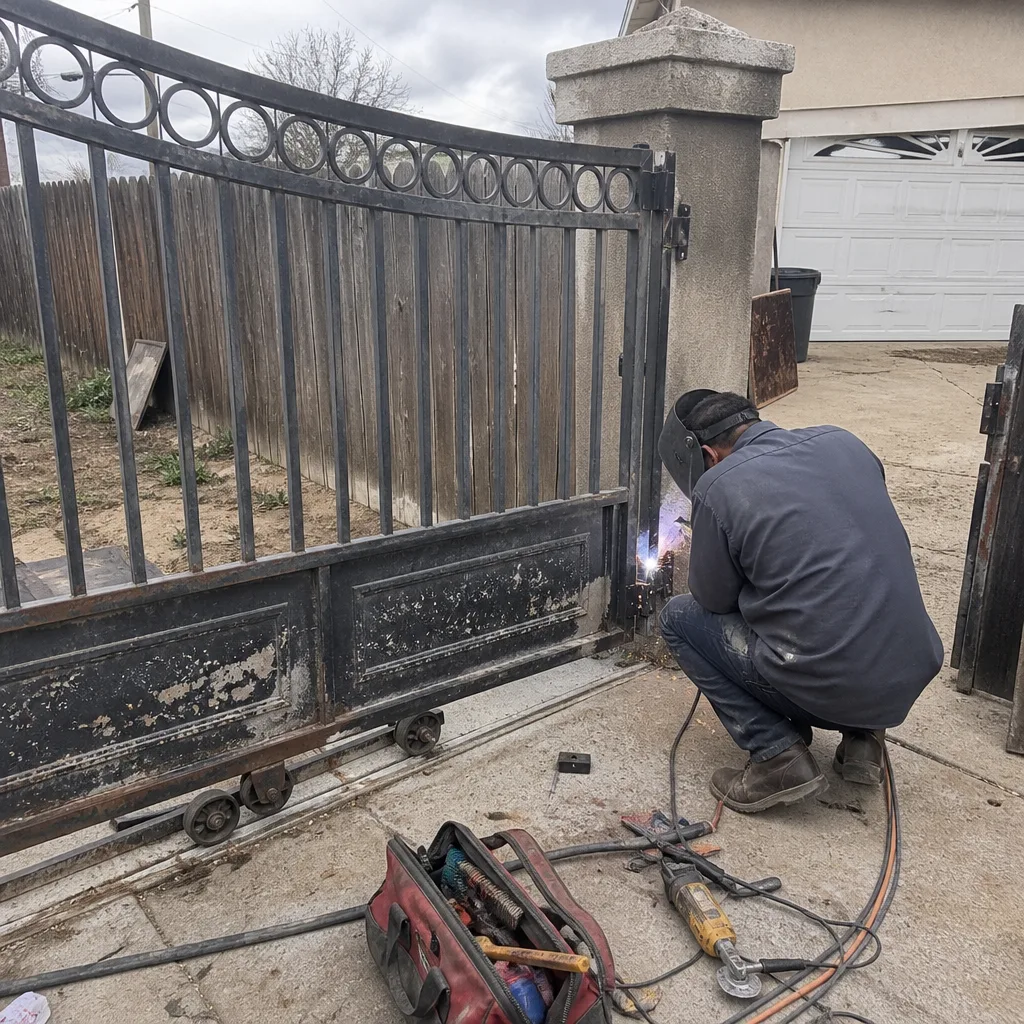 Before
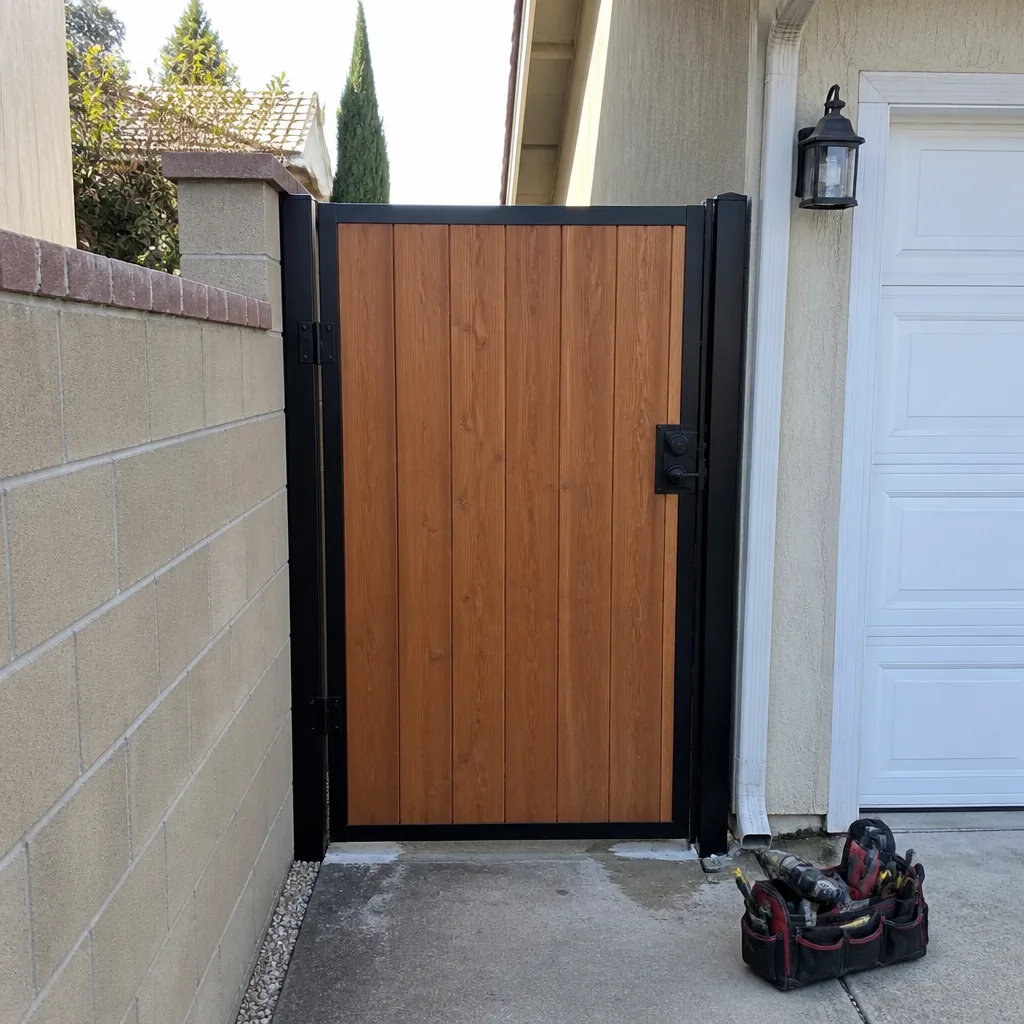 After
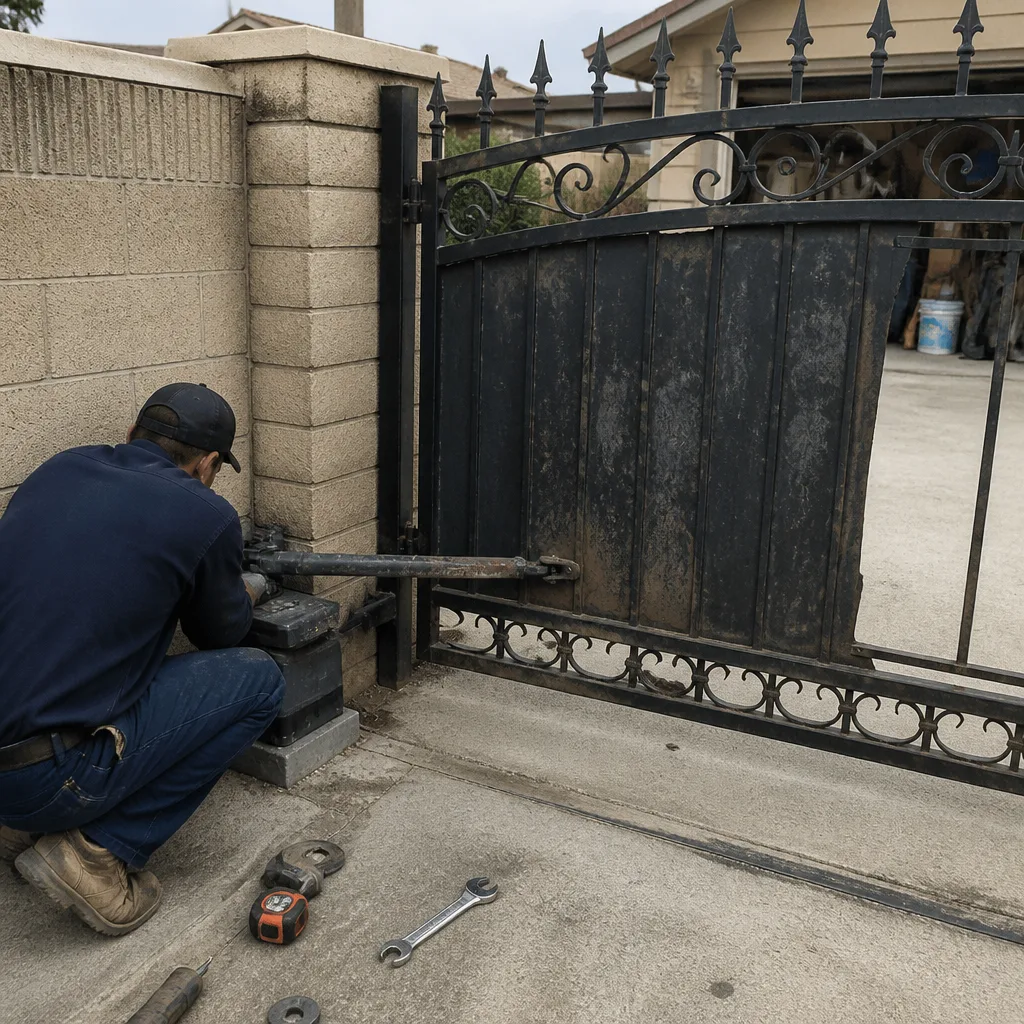 Before
 After
 Before
 After