
Last updated October 31, 2026
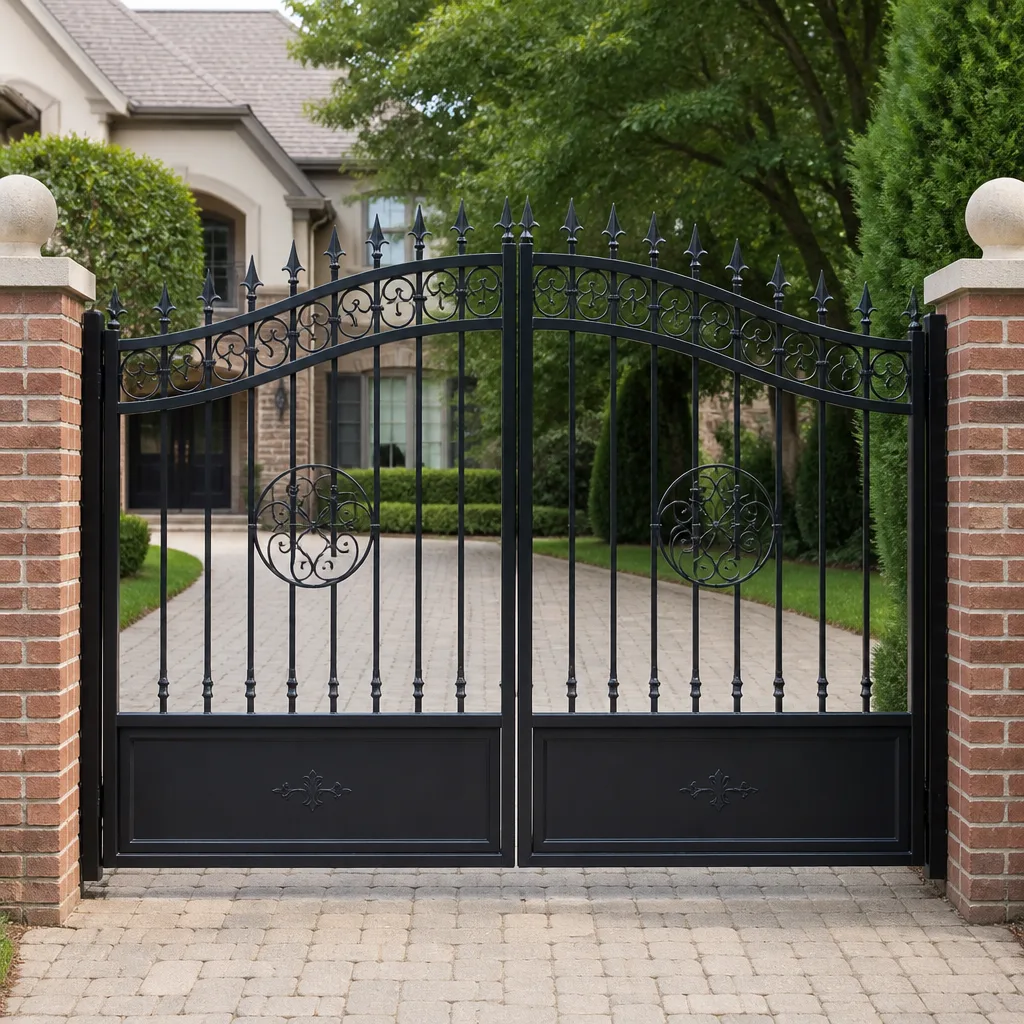 Wrought iron
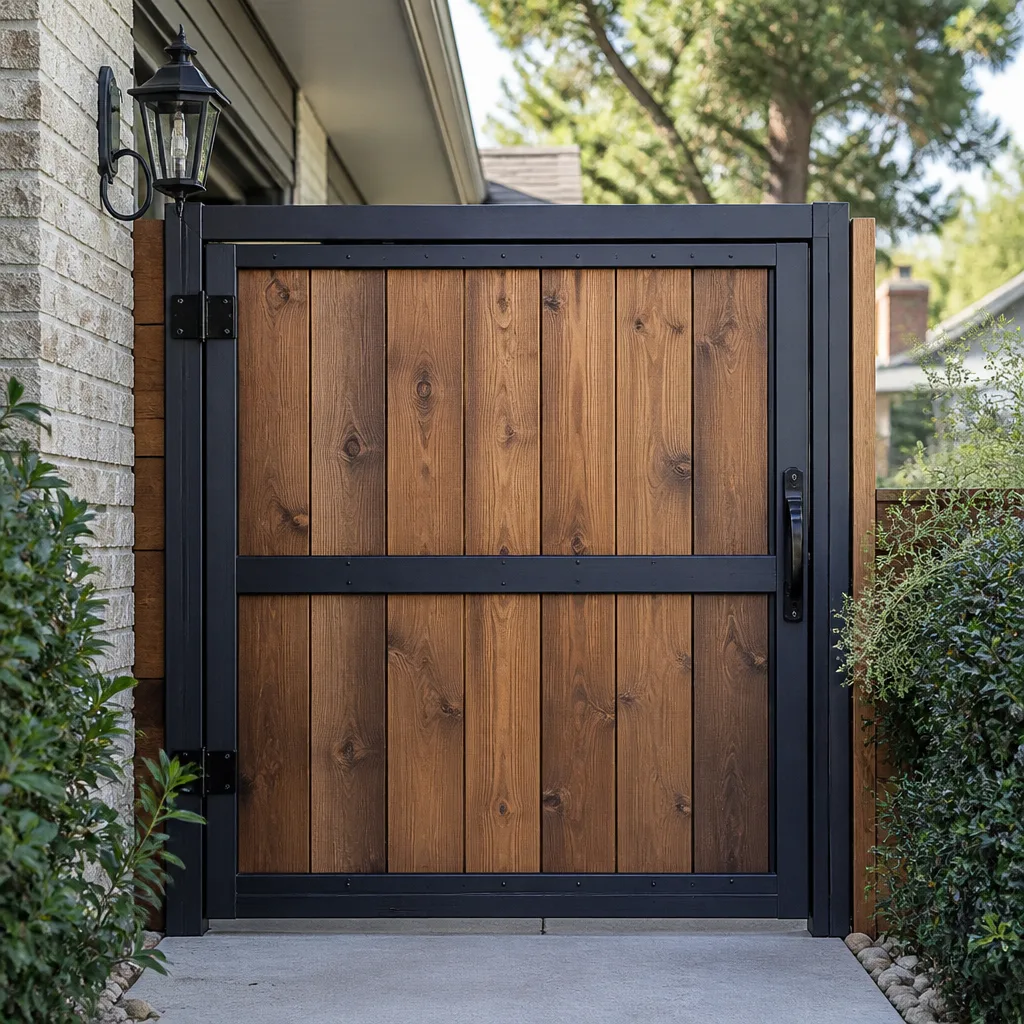 Wood & steel frame
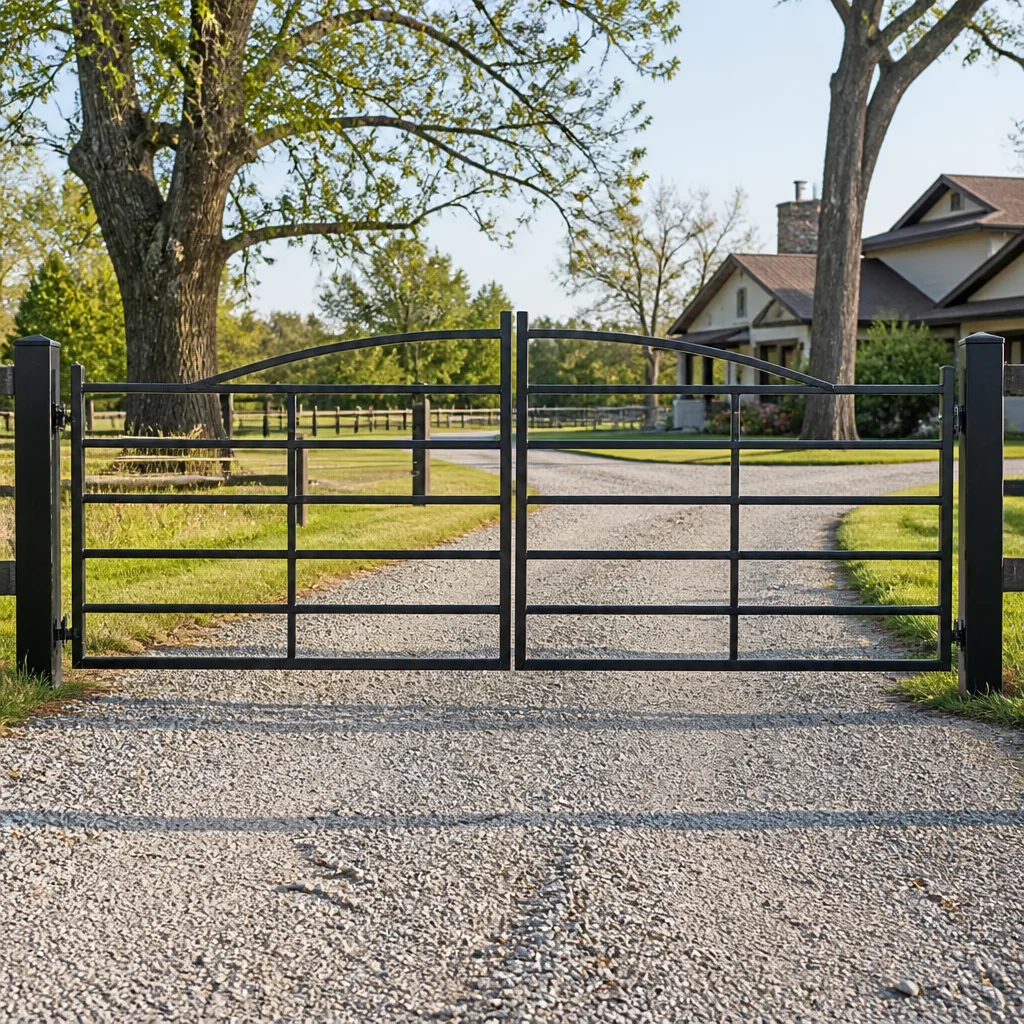 Farm & ranch
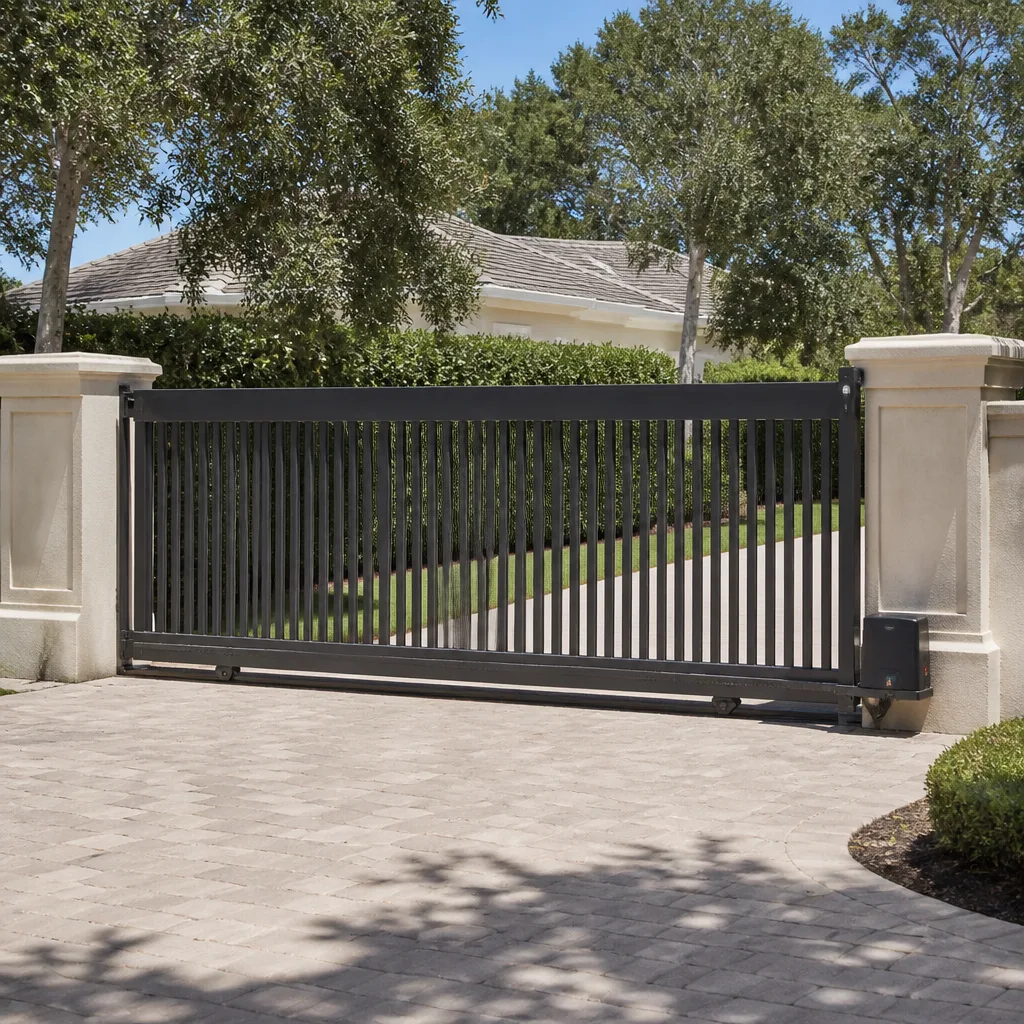 Sliding driveway gates
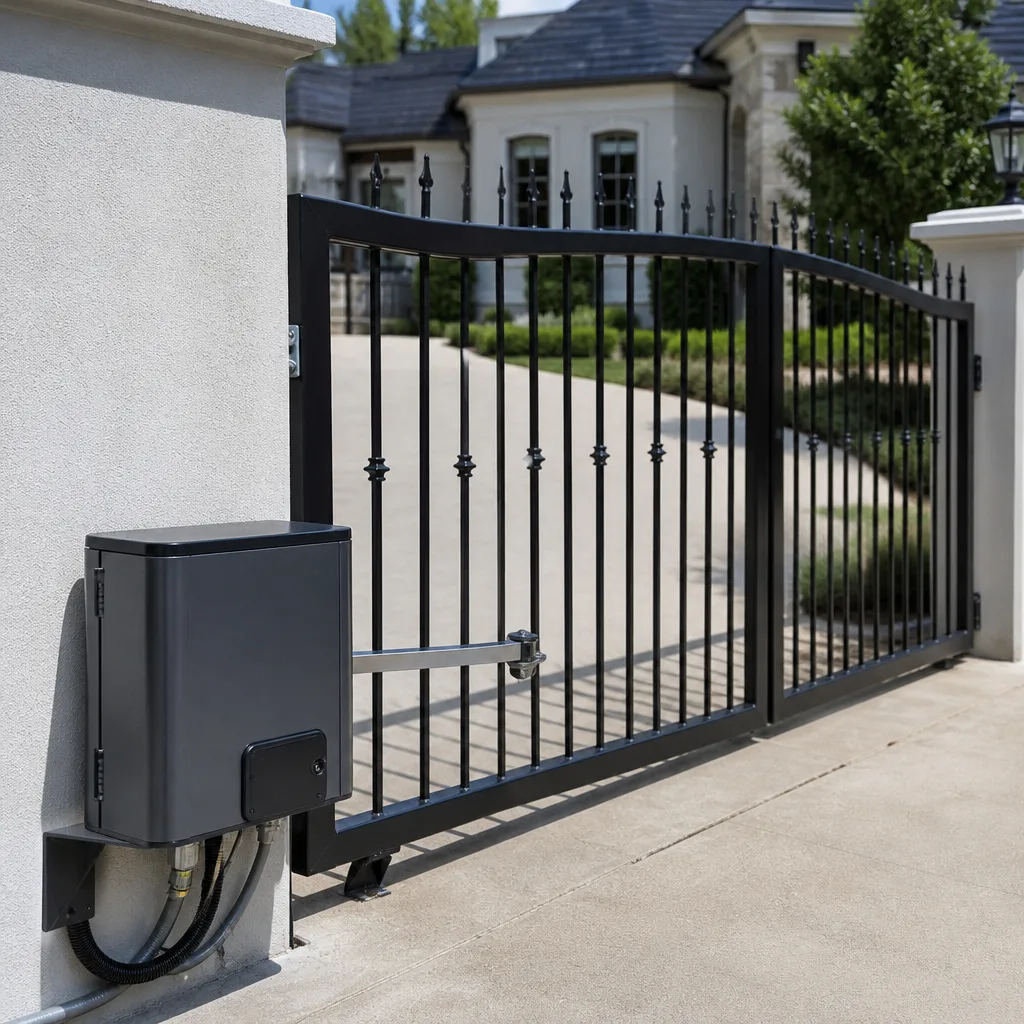 LiftMaster operators
Free on-site gate assessment - hinges, posts, and your LiftMaster or Nice gate operator checked before anything is quoted
The assessment is free and the quote is the invoice.
Get your free estimateDIY vs Professional Gate Repair: The Fontana Homeowner’s Decision Guide
California has a legal doctrine called premises liability, and it does not care whether you meant well. If a gate you repaired yourself later injures a delivery driver, a neighbor’s child, or a family member, the burden falls on you to prove the repair was sound. Many Fontana homeowners learn this only after an incident. This guide maps out what a homeowner can safely handle, where the line between maintenance and liability sits, and why electric gates in particular are rarely a hand-tool job. For more guides & resources, see our blog. We’ll give you a clear framework so you can decide with confidence before you touch a wrench.
Quick Answer
DIY gate repair in Fontana makes sense for visual inspections, lubrication, battery replacement, and minor obstruction clearing. It stops making sense the moment the repair involves gate travel limits, torque settings, sensor sensitivity, or anything tied to entrapment protection on an automated system. For those, calling a professional Gate Repair service is the only responsible call, and not just because of skill. It’s because California treats a gate injury on your property as your liability, whether you installed the part or not.
Styles & brands we work with
Table of Contents
- Why the Fontana Gate Repair Market Is Different
- What Is Actually Safe to DIY (and the Exact Limits)
- Where DIY Risk Becomes Legal Risk in California
- Electric vs Mechanical: The Complexity That Changes Everything
- Why Brand-Specific Knowledge Matters for Automated Gates
- The Hidden Cost of a Failed DIY Repair
- The Binary Decision Framework
- What a Professional Gate Diagnostic Actually Involves
Why the Fontana Gate Repair Market Is Different
Fontana sits in the Inland Empire’s inland climate zone, which means gates here face a particular set of conditions. Summer temperatures regularly climb past 100 degrees in July and August. The Santa Ana winds kick up dry dust from the foothills each fall. Iron and steel gates expand under that heat, which pulls on hinges, stresses welds, and accelerates wear on operator chains and belts. Dust does not help either. It works its way into gear assemblies and control boards, which is one reason we see more sensor failures and operator faults in Fontana than in coastal cities like Long Beach or Torrance.
Then there’s the soil. Fontana’s alluvial fan geology means many homes sit on expansive or shifting soil. A gate post that was plumb in March can be leaning by September after the ground shifts through a wet-winter-to-dry-summer cycle. A leaning post changes the gate’s travel geometry, which is the root cause of many “the gate was fine last month” failures. Homeowners often misdiagnose this as a motor problem when the motor is working fine against a misaligned load.
For broader context on local service patterns and what a thorough repair includes, see our Gate Repair in Fontana page.
What Is Actually Safe to DIY (and the Exact Limits)
We are not going to tell you to never touch your gate. That would be dishonest, and it would strip you of ownership of your own property. But we are going to be precise about where the safe zone ends, because most injuries happen when someone crosses an invisible line thinking they are still on solid ground.
Task 1: Lubrication. Safe, with limits. Applying a lithium-based grease or a silicone spray to hinge points, chain drives, and operator rails is genuinely safe for most homeowners. The limit is that you must not lubricate anything while the gate is moving, and you must not get lubricant on friction surfaces that need to grip, such as belt pulleys or clutch pads. A can of white lithium grease in the wrong spot turns a smooth operator into a slipping hazard.
Task 2: Visual inspection. Safe, and valuable. Walking the gate line once a month and looking for rust at weld points, cracked concrete around post footings, or frayed chain links costs nothing and catches failures early. Fontana’s dry climate means rust is less aggressive than in coastal Fontana-adjacent areas, but heat-related metal fatigue shows up as hairline cracks, especially on ornamental iron.
Task 3: Battery testing on solar-powered operators. Safe, with a caveat. For solar gate operators from brands like Mighty Mule or Ghost Controls, checking battery voltage with a multimeter is reasonably safe. The caveat is that battery failure often mimics board failure, and if you replace a battery and the gate still does not function, stop there. The next diagnostic step involves the control board, and that is professional territory.
Task 4: Basic obstruction clearing. Safe, with strict boundaries. Removing debris stuck in the track or a branch resting on the gate arm is safe. The boundary is this: if the obstruction caused the gate to reverse mid-cycle repeatedly, the gate’s force sensitivity profile may have shifted. You cleared the branch, but the gate’s safety logic learned a bad habit. That requires recalibration.
Everything beyond these four tasks starts to involve either stored mechanical energy, electrical current, or safety system calibration. Those are not skill lines. Those are liability lines.
Where DIY Risk Becomes Legal Risk in California
California Civil Code and case law place a heavy burden on property owners for injuries that occur on their property. When a gate crushes a child, pins a car, or strikes a pedestrian, the question a court asks is not “did the homeowner mean well.” The question is “did the homeowner meet the standard of care.”
Here is the part most Fontana homeowners have not priced in: if you repair your own automated gate and someone is injured, you cannot deflect responsibility to a contractor who installed the original system. Our Gate Repair Emergency Preparedness Guide for Fontana Homes explains how to avoid these situations. You are the last person who worked on the gate. An attorney will ask for the repair records, the calibration documentation, and the safety test results. If you cannot produce them because you did the work yourself with no log and no testing protocol, your liability exposure is significant.
The specific high-risk area is entrapment protection. California has adopted UL 325 standards for gate operators, which require that an automated gate reverse or stop when it encounters an obstruction. That standard applies to the gate as a system, regardless of who installed what. If your DIY repair alters the gate’s travel, torque, or sensor alignment, and the gate then fails to reverse on a child who was never in your imagination until it happened, the liability math is not in your favor.
This is not a hypothetical. Gate injuries are a known category in premises liability law. The legal standard for gate safety compliance is not “the homeowner did their best.” It is “the gate met the list-based safety standards in effect at the time.” Most homeowners cannot even name those standards, let alone verify them after a modification.
Electric vs Mechanical: The Complexity That Changes Everything
There are really two gate repair worlds in Fontana, and they require completely different decision frameworks.
Mechanical gate repair covers hinges, wheels, track alignment, post stability, latch hardware, and weld repairs. These are physical problems you can see. A homeowner with patience and the right tools can sometimes handle a hinge replacement on a light pedestrian gate. But on a heavy driveway gate, especially a sliding gate weighing 400 pounds or more, the mechanical forces involved can kill or maim if the gate shifts during the repair. The safe mechanical DIY window is narrow.
Electric and automated gate repair is a different category entirely. You are now working with control boards, operator arms, photo eyes, loop detectors, edge sensors, and low-voltage wiring. The failure modes are not always visible. A gate that opens but does not close could be a reversed sensor polarity, a corrupted limit setting, a failed relay on the board, or a wiring short. Guessing wrong does not just waste time. It can create a gate that behaves unpredictably, and an unpredictable automated gate is the most dangerous object on a residential property.
We’ve been called to Fontana homes where a homeowner attempted an operator repair and wired the capacitor backward. The gate ran in reverse for three days before the owner called us. That kind of fault would not be caught by a homeowner’s visual inspection. It was caught on our diagnostic bench.
For more on what electric gate repair actually involves, see our Electric Gate Repair in Fontana page.
Why Brand-Specific Knowledge Matters for Automated Gates
General handyman services in the Inland Empire often advertise gate repair alongside fence staining, hedge trimming, and gutter cleaning. There is nothing wrong with a handyman for most tasks on most homes. But automated gates are not most tasks.
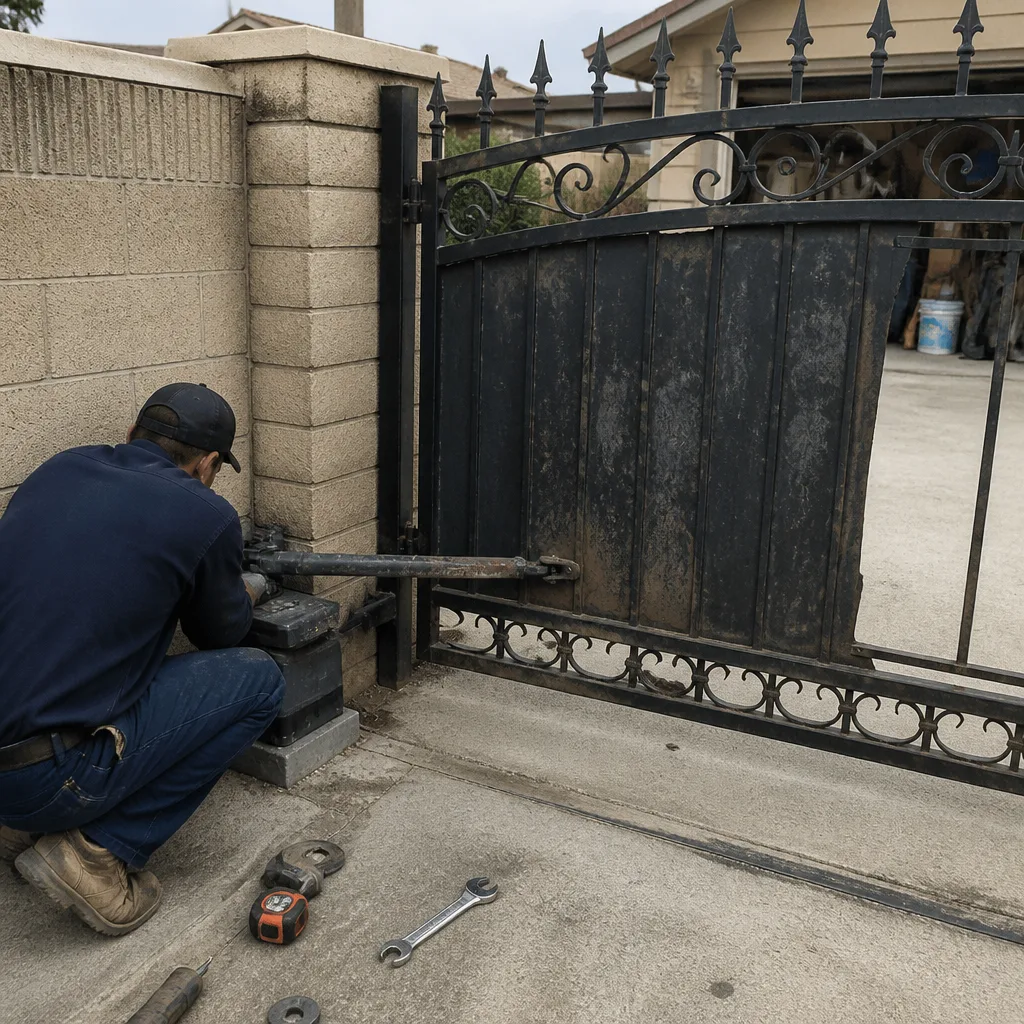
Each major gate operator brand has its own control logic, its own diagnostic error codes, its own limit-setting procedure, and its own compatibility requirements for accessories. A LiftMaster operator does not diagnose the same way a BFT operator does. A FAAC hydraulic operator has entirely different failure modes than a Linear electromechanical model. A homeowner who watches one YouTube video for a Mighty Mule opener will not know what to do with a DoorKing board that flashes a code they have never seen.
We work on the brand you already have. That is not a slogan for us. It is the operating principle of our service model. Our team carries diagnostics for LiftMaster, FAAC, BFT, Linear, and the other major automation brands precisely because the worst outcome for a Fontana homeowner is being told “we don’t service that brand” after the gate has already failed. A brand-agnostic specialist finds the actual fault regardless of manufacturer. A single-brand dealer often pushes a full replacement because they do not stock parts for anything else.
The right fix, not the easy upsell. That is the standard a specialist holds.
The Hidden Cost of a Failed DIY Repair
Homeowners typically evaluate the DIY decision as “parts cost plus my time versus professional quote.” That calculation misses the most expensive line item: diagnostic labor to reverse-engineer what you changed.
Here is a typical Fontana scenario we see two or three times a month. A homeowner replaces a photo eye sensor himself, gets the wiring polarity reversed, and then calls us because the gate opens but will not close. We arrive and spend the first hour just establishing what the homeowner changed before the system stopped working. That hour of diagnostic labor is on the invoice. If the homeowner had called us first, we would have replaced the sensor, verified polarity, and recalibrated the safety loop in one visit, for less money than the sum of the homeowner’s parts purchase and our diagnostic time.
And the risk compounds. A failed DIY repair on a gate operator can damage the control board. A board that was fine before the homeowner shorted two wires is now a $400 to $900 board replacement on top of the original sensor. The cheapest repair is the one done correctly the first time, by someone who has seen that exact failure before. See our Gate Repair Cost Breakdown: The Fontana Homeowner’s Reference for 2026 for detailed pricing.
There is also the time cost. A professional gate repair in Fontana is usually completed same day for common mechanical and electrical faults. A DIY attempt can leave the gate inoperable for days while you order parts, watch conflicting videos, and wait for tools. For a gate that is supposed to secure your property, days of inoperability is a security problem on top of everything else.
The Binary Decision Framework
After years of repairing gates in Fontana and surrounding communities, we’ve developed a decision framework that is deliberately simple. It uses one question, and the answer predicts the correct path with surprising accuracy.
The question: will this repair require adjusting gate travel, torque, or sensor sensitivity on an automated system?
If the answer is yes, the liability math always favors a professional. Not because you cannot learn to adjust travel limits. But because when you do, the gate’s entrapment protection profile changes, and California law puts the verification burden on the property owner. A professional adjustment includes a documented safety test. A DIY adjustment includes hope.
Here is how the decision maps out:
- Is the gate purely mechanical and you are replacing a clearly identical part? DIY may be reasonable for a light pedestrian gate hinge or a latch. Heavy driveway gates: call a professional.
- Does the repair involve wiring, a control board, a capacitor, or a transformer? Professional. No exceptions worth mentioning.
- Does the repair involve the gate’s safety reversal or entrapment sensors? Professional. This is where legal risk concentrates.
- Will the repair require removing the operator cover and working with the motor assembly? Professional. Stored energy and electrical current are both present.
- Is the gate behaving intermittently, unpredictably, or differently after weather events? Professional. Intermittent faults are diagnostic problems, not repair problems, and homeowners do not have diagnostic rigs.
If you are still uncertain after applying the framework, the diagnostic call is cheaper than the failed repair. Always.
What a Professional Gate Diagnostic Actually Involves
One reason the professional versus DIY gap is so wide is that the diagnostic process itself is invisible to most homeowners. You see a gate that does not open. We see a chain of subsystems that must be ruled out in order. Here is what actually happens on a pro call in Fontana.
- Power supply verification. We check incoming voltage at the operator, not just at the outlet. Fontana’s older neighborhoods have aging panels with voltage drop issues that masquerade as operator failures.
- Operator mechanical inspection. Chain tension, belt condition, gear wear, and drive shaft play are evaluated before we ever look at the control board.
- Safety device integrity test. Photo eyes, edge sensors, and loop detectors are tested for alignment, continuity, and response time. This is the step most DIY repairs skip entirely.
- Control board diagnostics. Error codes, relay function, and capacitor health are checked against the manufacturer’s diagnostic matrix for that specific brand and model.
- Travel and force calibration. The gate’s travel limits and force sensitivity are re-verified against the manufacturer’s spec after any repair. This is the UL 325 compliance step.
- Full cycle test. The gate runs through open, close, mid-cycle obstruction reversal, and photo eye interruption. Every test is logged.
That last point matters more than homeowners realize. A documented test log is the difference between “we think the gate is safe” and “we can demonstrate the gate was tested to the standard.” If an incident ever occurs on a Fontana property, that log is the first thing a court will ask for.
Common Mistakes to Avoid
- Using the wrong lubricant on a chain-drive operator. WD-40 is a solvent, not a long-term lubricant. It degrades existing grease and leaves the chain running dry within weeks. Lithium grease or a manufacturer-specified chain lubricant is correct.
- Bypassing a photo eye sensor because it keeps triggering. This is the most dangerous DIY shortcut on any automated gate. A bypassed sensor is an open door to a catastrophic entrapment injury, and it voids safety compliance for the entire system.
- Replacing a control board without verifying the input power. Fontana’s summer voltage drops can make a healthy board look dead. The new board fails the same way, and the homeowner has spent $600 to learn an electrician’s lesson.
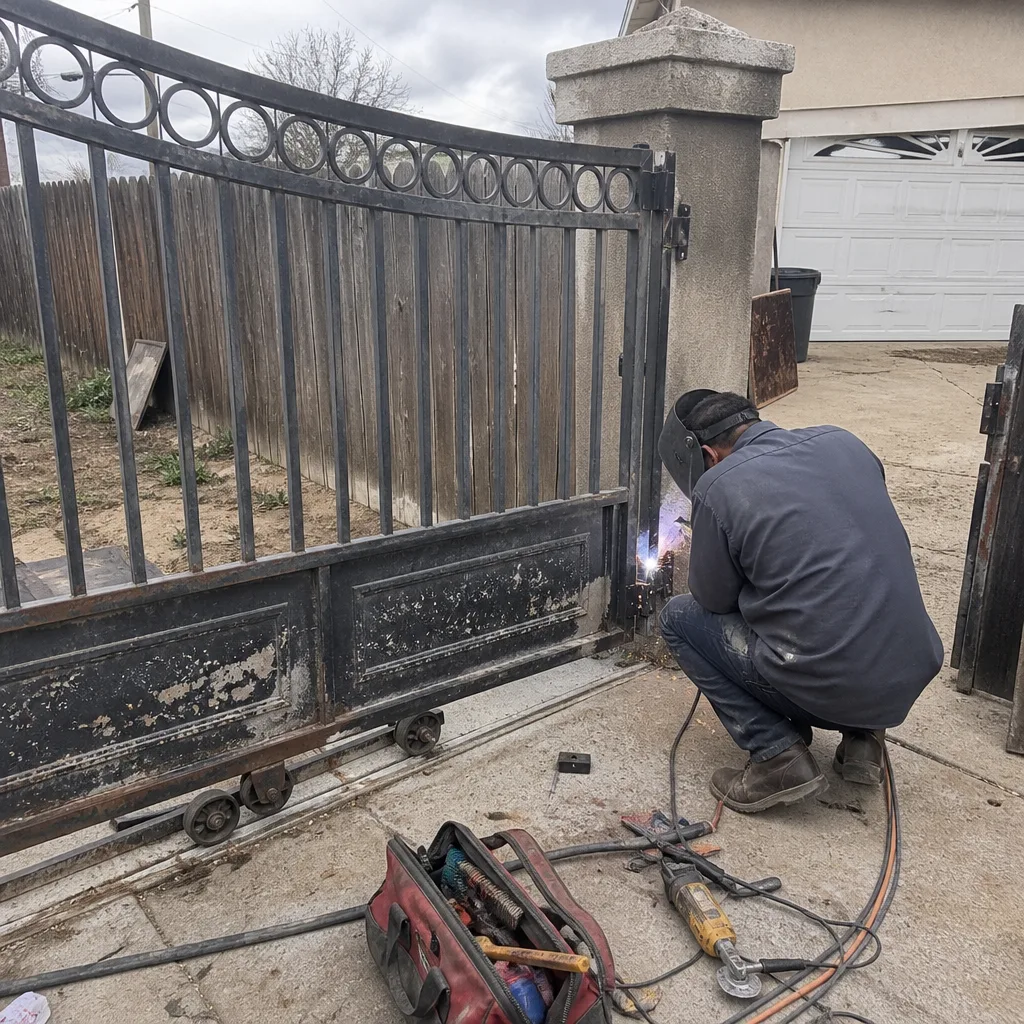
- Welding a gate frame while the gate is still hung. The heat from a weld can travel into the operator arm and damage gears and seals. A proper weld repair removes the gate from its mounting and protects the automation hardware.
- Adjusting travel limits to “fix” a gate that is hitting a post. If the gate is striking a post, the post has shifted or the gate has sagged. Changing the travel limit masks the problem and changes the safety profile. Fix the geometry, not the software.
- Assuming a solar gate battery is the only problem. A dead battery often means a failed charging circuit or a degraded solar panel. Replacing the battery without testing the charge path just schedules another failure.
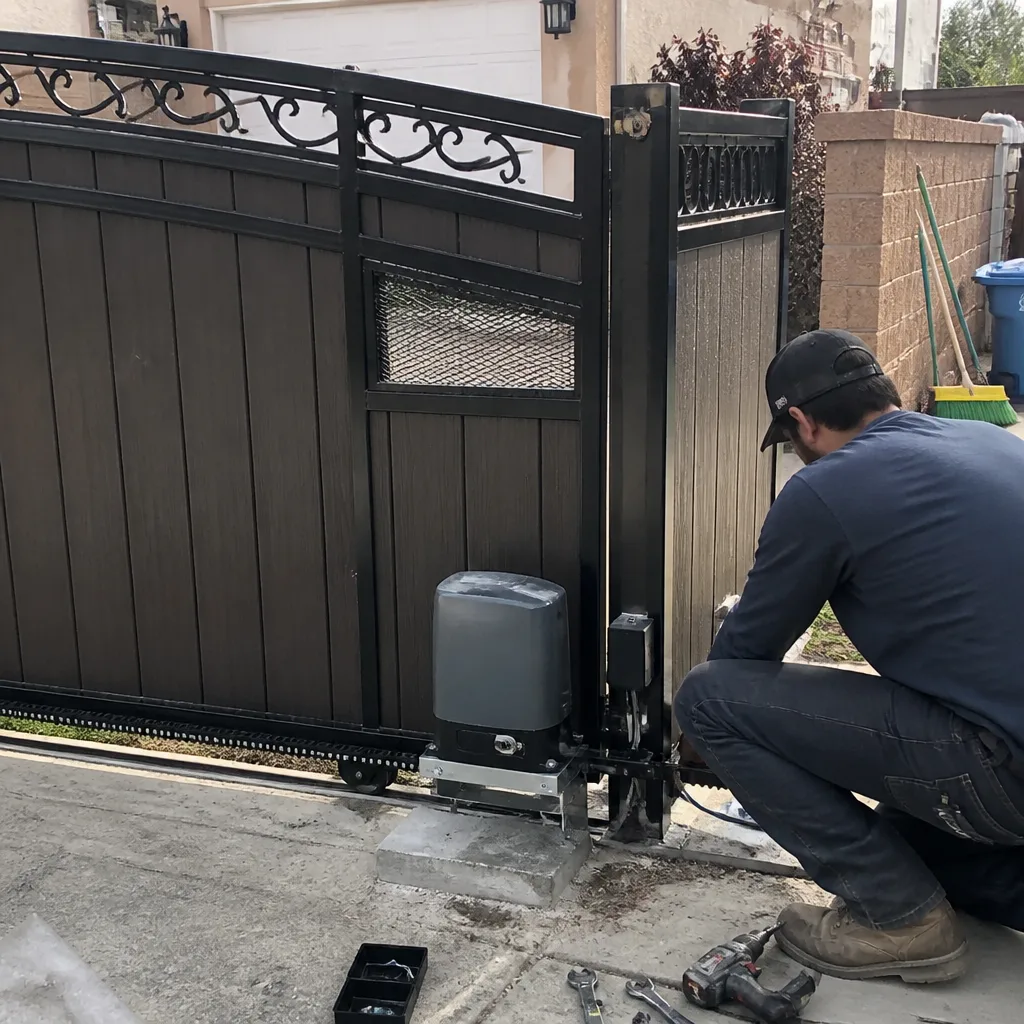
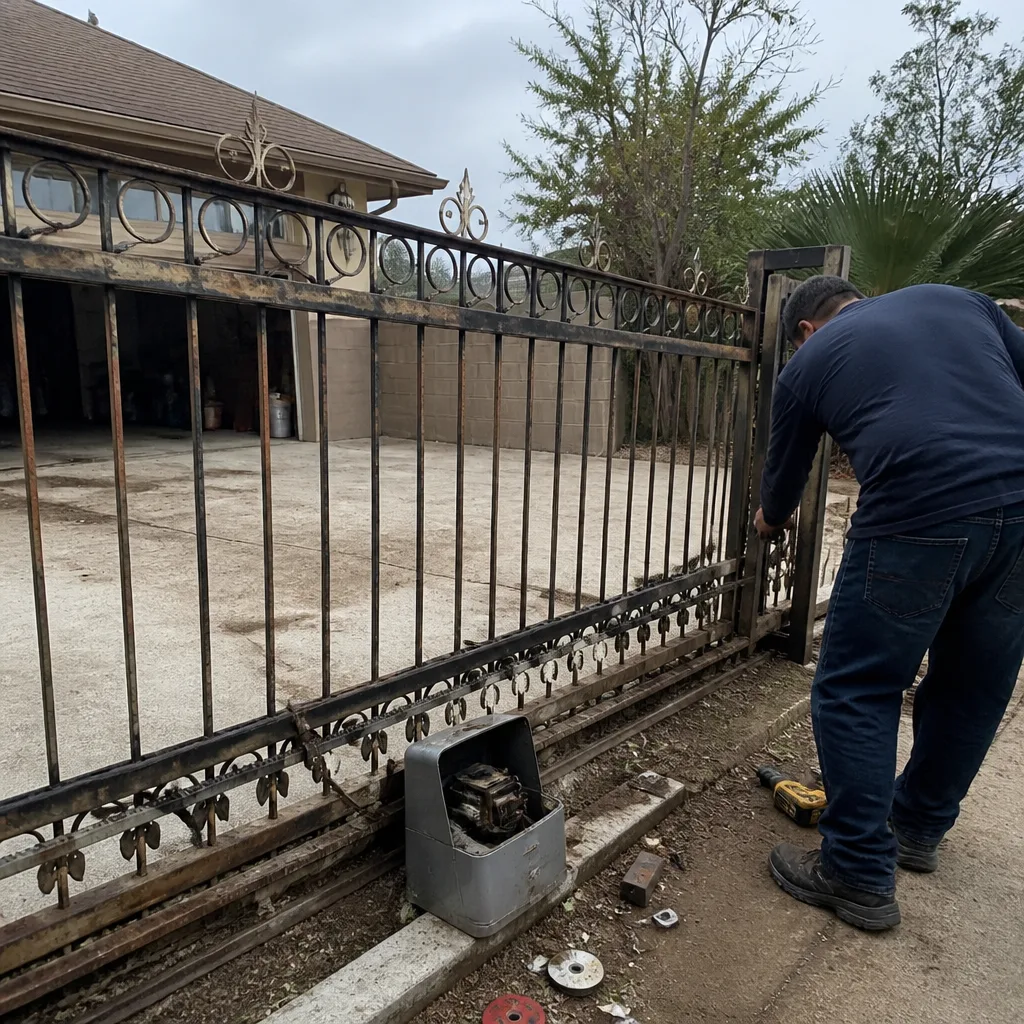
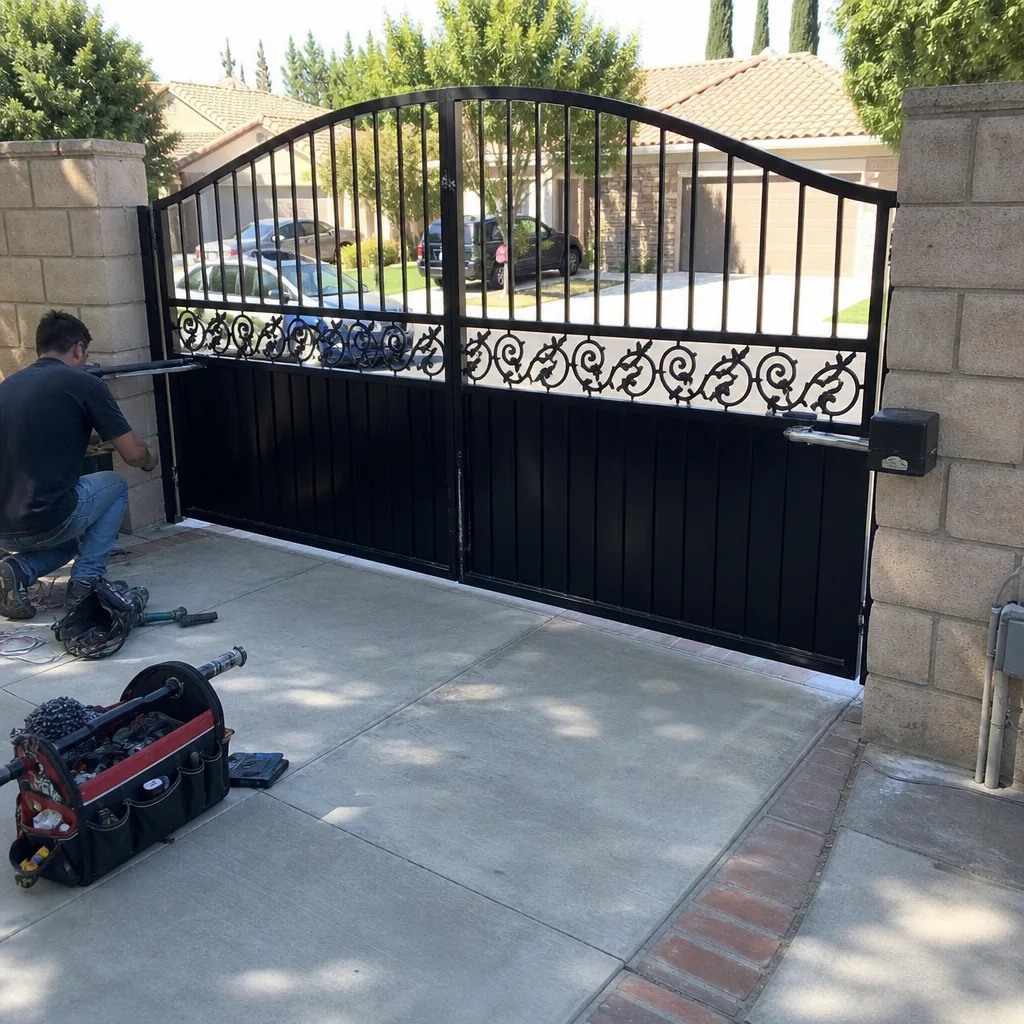
See the difference
 Before
 After
 Before
 After
 Before
 After
When to Call a Professional
Call a professional when the gate is automated and the fault is not one of the four safe DIY tasks listed above. Call a professional when the gate’s behavior changed suddenly, when the gate reverses without an obstruction, when the gate makes a grinding or humming sound it did not make before, or when the gate moves slower than it did last month. Call a professional when you bought a home with an existing automated gate and you do not know its service history. And call a professional when the gate touches a property line, a shared easement, or an HOA-governed entrance, because those situations add contractual and neighbor-liability dimensions on top of the physical repair. Manor Gate Repair offers free estimates in Fontana – call (844) 703-6053. Any question about whether a problem is safe to DIY gets an honest answer, not a sales pitch.
Frequently Asked Questions
Minor repairs and like-for-like part replacements generally do not require a permit in Fontana, but any modification that changes the gate’s operating footprint, adds an operator to a previously manual gate, or alters the safety system may require review. If your gate is part of an HOA-controlled entrance or sits on a property line, the HOA documents or a shared wall agreement may impose additional restrictions. The safest path is to check with the City of Fontana’s building department before starting any structural or electrical work.
Professional gate repair in Fontana typically falls into a range based on the nature of the fault. A simple sensor realignment or photo eye replacement might run $150 to $350. A control board replacement on a LiftMaster or FAAC operator often lands between $400 and $900 with labor. A full operator replacement starts around $1,200 and rises from there depending on the brand and the gate’s size. These figures are estimates; the actual quote is agreed before any work starts. Call (844) 703-6053 for an exact price on your specific gate.
Turning off the power removes the immediate electrical hazard, but it does not remove the stored energy in capacitors, the potential energy in the gate’s travel path, or the mechanical tension in springs, chains, and operator arms. A capacitor can hold a charge long after the breaker is off. A gate that has been disconnected from its operator can still roll or swing freely. Power-off does not equal safe-to-touch.
A brand-agnostic gate specialist in Fontana works across multiple automation manufacturers rather than being tied to a single dealership. That means the tech can diagnose and repair LiftMaster, FAAC, BFT, Linear, and other major brands without pushing a full replacement simply because parts for one brand are not stocked. Our service model is built on this: we work on the brand you already have. See our Manor Gate Repair home page for the scope of our service area and capabilities.
Installing a gate operator on a manual gate is not a beginner project. It requires the operator, a power source, safety devices that meet UL 325 standards, and a gate structure that is rigid enough to handle motorized operation. Most manual gates in Fontana were not built for automated use. They flex, sag, and bind under motor load. A professional installation starts with a structural assessment, not a parts order. For more detail, see our Gate Installation in Fontana page.
Most professional gate diagnostics in Fontana take between 45 minutes and two hours depending on the gate’s complexity and whether the fault is intermittent. The diagnostic includes power verification, mechanical inspection, safety device testing, and control board review. The goal is not just to identify the fault but to establish a baseline so future failures can be identified faster. A thorough diagnostic is the cheapest part of any repair.
The Bottom Line
The DIY versus professional decision is not about skill level. It is about liability exposure and system complexity, and most Fontana homeowners can safely maintain a gate without being able to safely repair one. Lubrication, inspection, battery testing, and obstruction clearing are legitimate homeowner tasks with clear limits. Everything else on an automated gate touches safety systems, stored energy, or brand-specific control logic. The key question is binary: does the repair require adjusting travel, torque, or sensor sensitivity? If yes, the math favors a professional every time. A Fontana gate protects your home, your family, and your legal position. Treat it accordingly.
Written by the team at Manor Gate Repair, serving Fontana since 2014.