
Last updated October 31, 2026
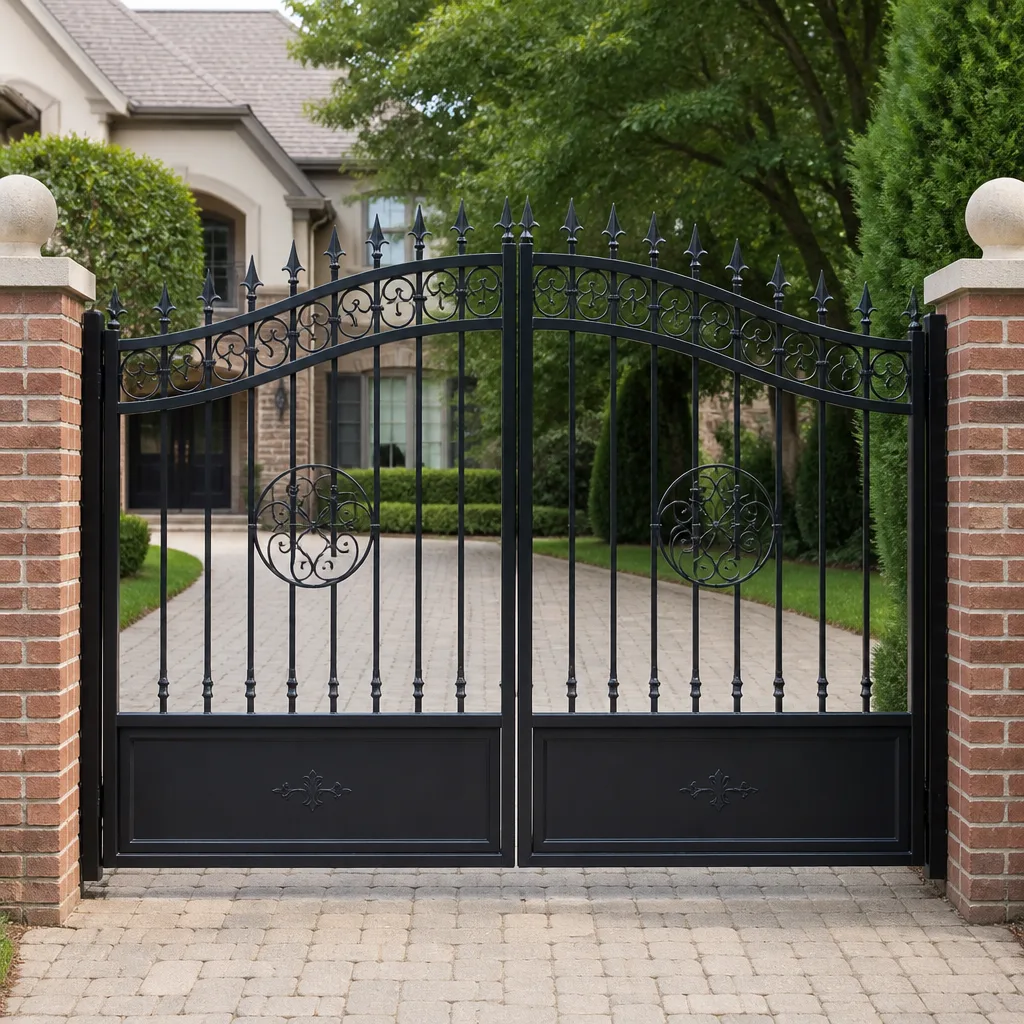 Wrought iron
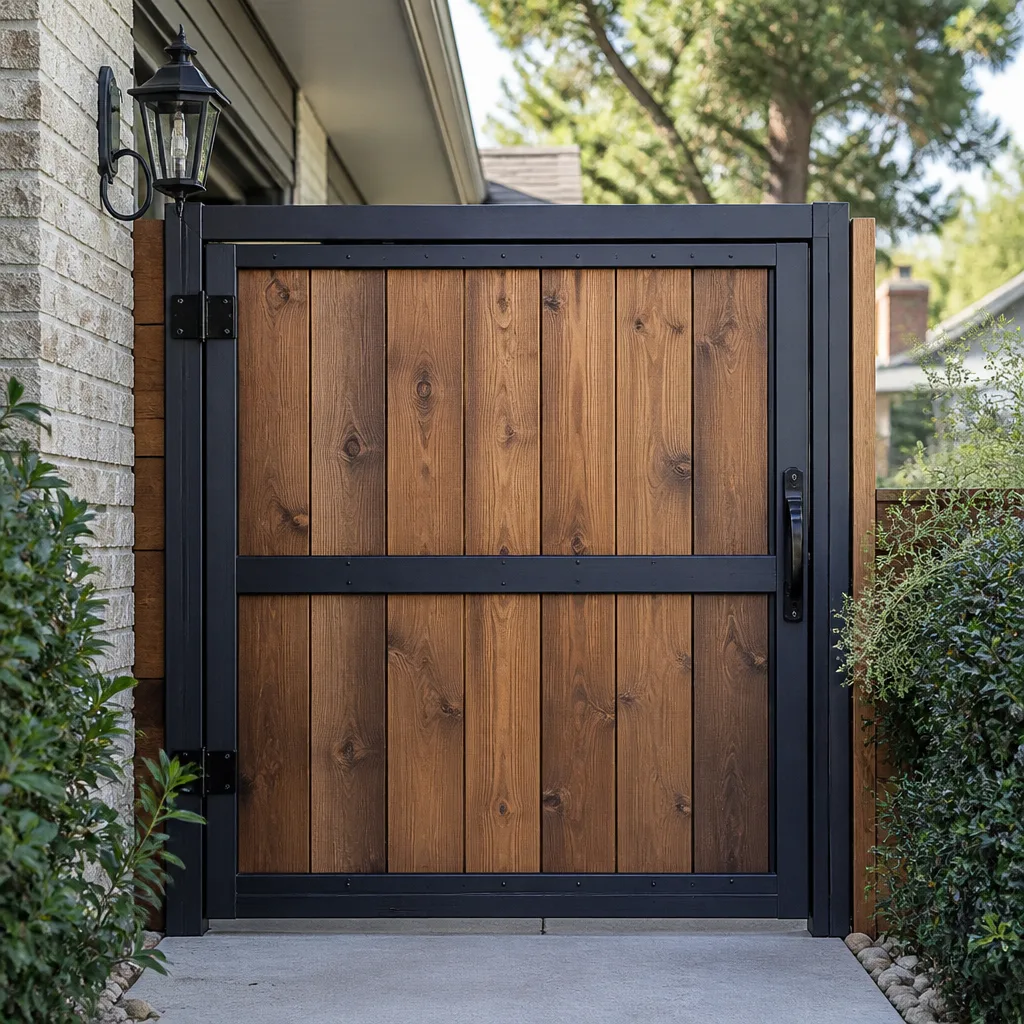 Wood & steel frame
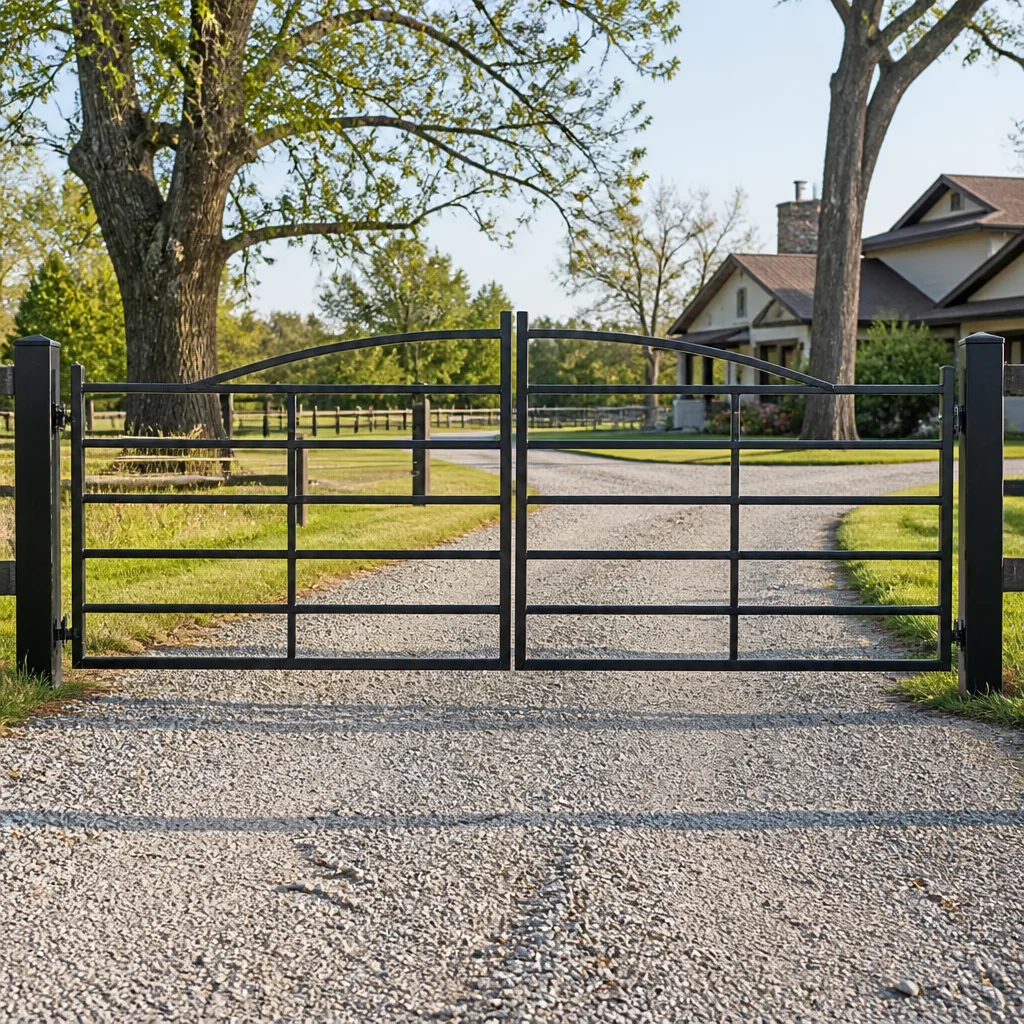 Farm & ranch
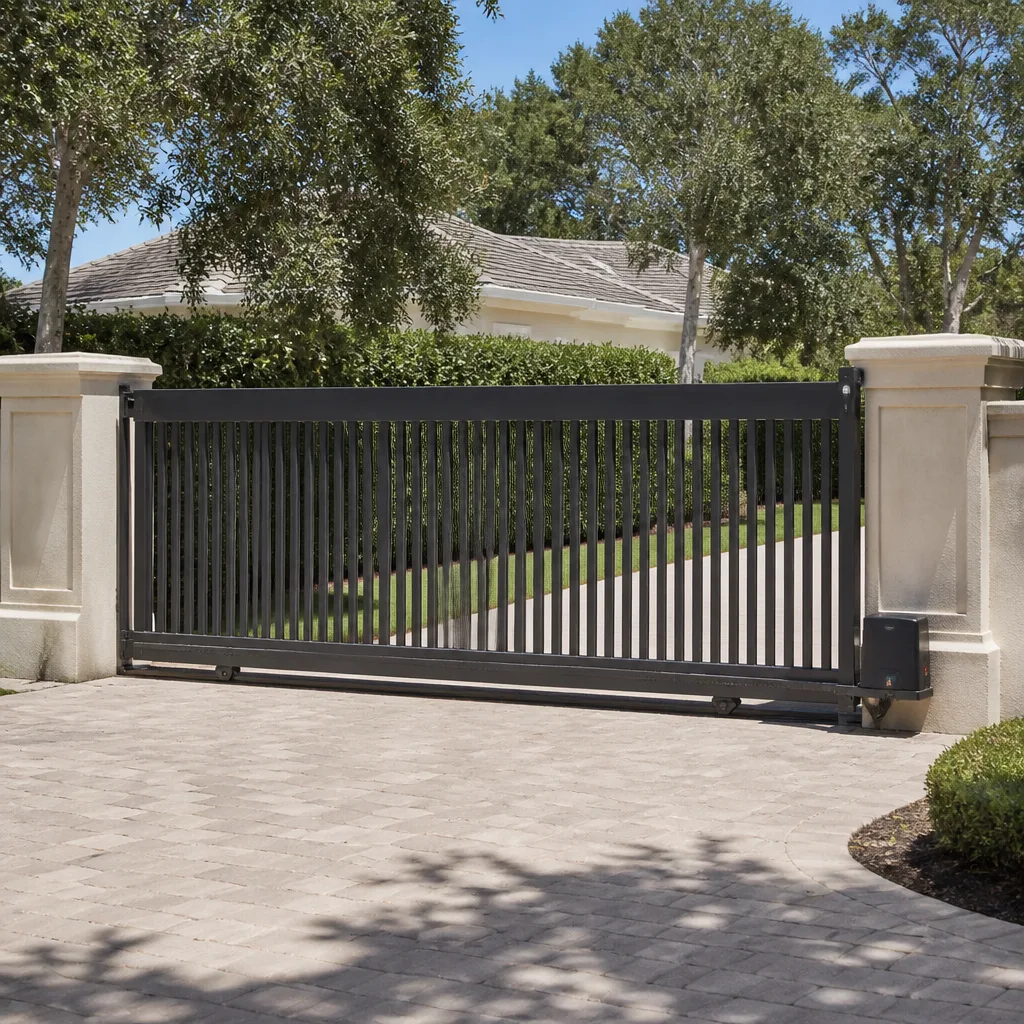 Sliding driveway gates
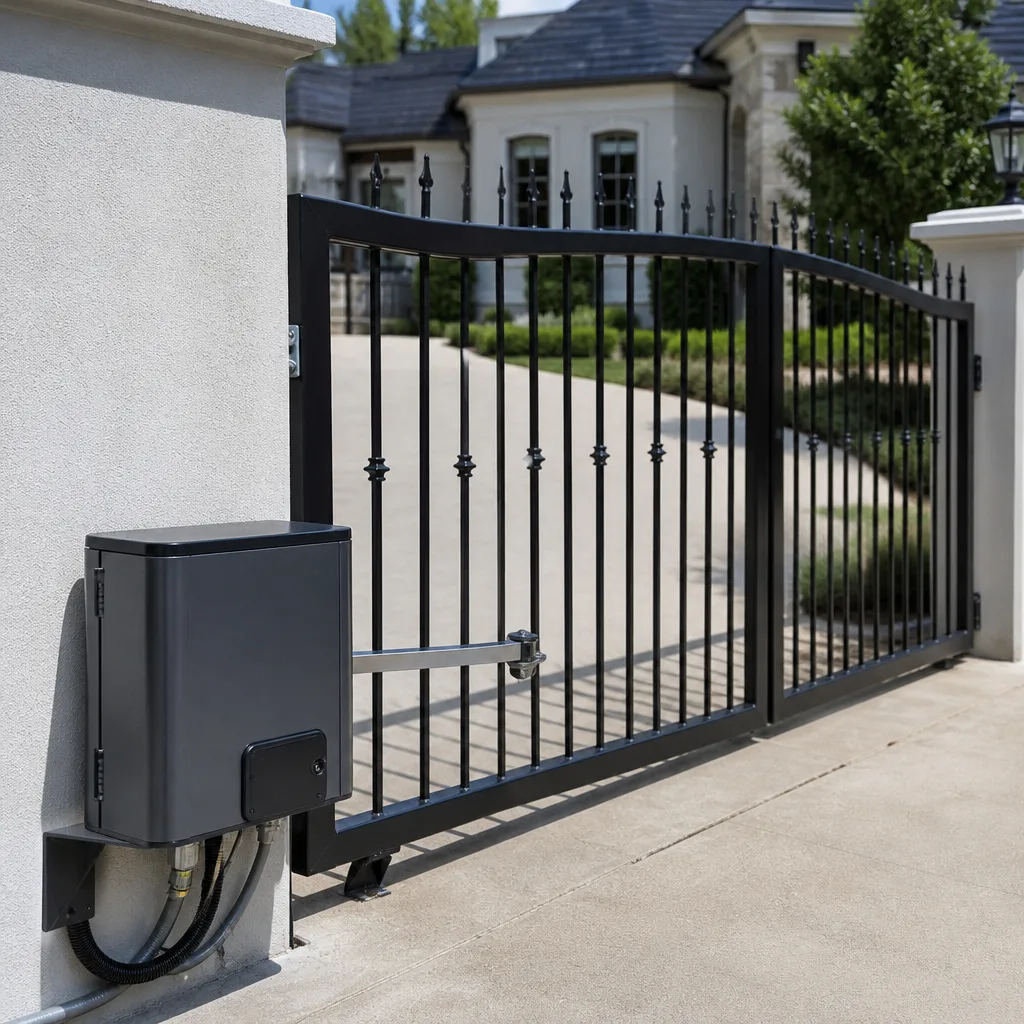 LiftMaster operators
Free on-site gate assessment - hinges, posts, and your LiftMaster or Nice gate operator checked before anything is quoted
The assessment is free and the quote is the invoice.
Get your free estimateGate Repair Emergency Preparedness Guide for Fontana Homes
Every year in Fontana, hundreds of homeowners discover their automated gate has failed at the worst possible moment. It’s 9:40 PM on a Saturday. The gate that protected your driveway for a decade is now stuck half-open, or worse, fully open with no way to secure it. The combination of Fontana’s extreme summer heat, Santa Ana winds carrying fine dust, and the fact that most residential gate parts aren’t stocked locally means a gate failure Friday night can leave your property exposed for 48 to 72 hours. This guide walks through the two distinct emergency categories, the interim protocols that actually work, and the diagnostic sequence that saves you from paying after-hours rates for a problem you could have identified yourself. We wrote this specifically for Fontana homeowners because our climate and our distance from major distribution centers create challenges that residents of coastal cities don’t face.
Styles & brands we work with
Quick Answer
Gate emergencies in Fontana break into two categories requiring opposite responses: a gate that won’t open (you’re locked out or trapped) and a gate that won’t close (your property is unsecured). For access failures, the manual release mechanism on your operator is the immediate fix and it’s safe to use when done correctly. For security failures, you need a temporary physical barrier and a same-day or next-day service call from a gate specialist who can diagnose the actual fault rather than guessing.
Table of Contents
- Access Failure: When Your Gate Won’t Open
- Security Failure: When Your Gate Won’t Close
- How to Safely Use Manual Release Without Voiding Your Warranty
- Interim Security Protocols for a Gate Stuck Open
- Diagnostic Triage: Power Outage vs. Component Failure
- What to Have Ready Before Calling an Emergency Gate Service
- Pre-Failure Preparedness: The Two Spare Components Worth Keeping
- Common Mistakes to Avoid
- When to Call a Professional
- Frequently Asked Questions
- The Bottom Line
Access Failure: When Your Gate Won’t Open
A gate that won’t open is a different problem than a gate that won’t close, and the distinction matters more than most homeowners realize. Access failure means you can’t get your vehicle in or out, which is an immediate logistical problem but not an immediate security problem. Your property is still protected. The gate is doing its job, just too well.
In Fontana, access failures happen disproportionately during summer months. The heat causes solder joints on control boards to expand and contract, which over years creates microscopic fractures that eventually fail completely. We see this pattern regularly across every brand we service, from FAAC hydraulic operators to Linear and Viking swing gate systems. The failure often presents as a gate that worked fine yesterday and is completely dead today, with no obvious cause.
The first response to an access failure is not to call a technician. It’s to check whether the operator has power. A surprising number of “dead” gates in Fontana are caused by a tripped GFCI outlet, a breaker that flipped during a heat wave, or a transformer that overheated and shut down. These are homeowner-resolvable in under five minutes.
Initial Access Failure Checklist
- Check the breaker panel. Gate operators are frequently on a dedicated circuit. If the breaker is tripped, reset it once. If it trips again immediately, do not reset it a second time. That indicates a short and requires a professional diagnosis.
- Check for a GFCI outlet near the operator. Many Fontana homes have the operator plugged into an exterior GFCI outlet. Press the reset button. This fixes roughly 15% of the “dead gate” calls we receive.
- Check the operator’s power indicator light. If the operator has power but the gate won’t move, you’ve ruled out electrical supply and narrowed the problem to the operator, control board, or safety sensors.
- Look for visible obstructions. Fontana’s wind blows debris into gate tracks and pivot points. A branch, a child’s toy, or built-up sand can trigger the obstruction sensor and stop the gate.
- Use the manual release. Every automated gate has one. Engaging it correctly (covered in detail below) lets you operate the gate by hand until a repair is scheduled.
If the gate won’t open and you’ve confirmed power is reaching the operator, the problem is likely a failed control board, a burned capacitor, or a seized motor. These are not homeowner-fixable and require a specialist with diagnostic equipment. The good news is that access failures don’t create a security emergency, so you have time to schedule a repair during normal business hours and avoid after-hours rates. For a full breakdown of what access failure repairs typically involve, see our Gate Repair in Fontana service page.
Security Failure: When Your Gate Won’t Close
A gate that won’t close is the genuine emergency. Your property boundary is now open. This isn’t a convenience problem, it’s a liability problem. An unsecured driveway gate in Fontana signals to anyone passing by that the property has a security system that has failed, which can be worse than having no gate at all.
The most common cause of a gate that won’t close in Fontana is a failed safety sensor or photo eye. These sensors are designed to prevent the gate from closing on a vehicle or person, and when they malfunction, they default to “open” mode. The gate behaves as if something is always in the path. Other culprits include a limit switch that has drifted out of alignment, a control board that’s sending incorrect signals to the motor, or a physical obstruction in the gate’s travel path.
Security failures demand immediate action, but that doesn’t mean you should start disassembling your operator at 10 PM. The right sequence is: secure the property with a temporary barrier, then call for professional diagnosis. A gate stuck open on a Friday evening in Fontana will likely remain open until Monday unless you have a relationship with a service that offers weekend response. For electric gate issues specifically, our Electric Gate Repair in Fontana page covers the diagnostic process in depth.
How to Safely Use Manual Release Without Voiding Your Warranty
Every automated gate operator includes a manual release mechanism. It exists for exactly the scenario you’re facing: the operator has failed and you need to move the gate by hand. Using it correctly is safe and will not void your warranty. Using it incorrectly, or forcing the gate without engaging the release, is where damage happens.
The exact location and style of the manual release varies by brand and model. On most residential swing gate operators, including Linear and Viking models common in Fontana, the release is a lever or knob mounted on the operator arm itself. On BFT underground operators, it’s typically a keyed release accessible through a small cover plate in the driveway. On FAAC hydraulic operators, the release is usually a red knob or handle on the hydraulic piston.
- Disconnect power to the operator first. Flip the breaker or unplug the unit. You don’t want the motor to engage while you’re working the release mechanism.
- Locate the release. Refer to your operator’s manual if you have it. If you don’t, look for a clearly marked lever, knob, or key slot on the operator housing or arm. Manufacturers make these accessible by design because they know power failures happen.
- Engage the release. Turn, pull, or unlock the mechanism according to the manufacturer’s design. You’ll typically feel or hear a mechanical disengagement. The gate is now free to move by hand.
- Move the gate slowly and completely. Support the gate’s weight. Don’t let it swing freely or slam against the stops. A gate that moves too fast can damage the hinges, the operator arm, or the stop posts.
- Re-engage the operator when the gate is in the desired position. This locks the gate in place so it doesn’t drift. If you’re leaving the gate open as a temporary solution, consider whether leaving it locked open is actually what you want, or whether a temporary barrier is the better call.
One critical caveat: manual release on a gate that has failed mid-cycle can be dangerous. If the gate stopped halfway through its travel and you release it manually, it may swing or slide suddenly as the tension changes. Stand clear of the gate’s path when you engage the release, and never put your hands between the gate and the post or the operator arm and the gate. If you’re uncertain about your specific operator, call us at (844) 703-6053 and we’ll walk you through the release procedure for your model over the phone.
Interim Security Protocols for a Gate Stuck Open
When your gate is stuck open and a technician can’t arrive for several hours or until the next day, you need a short-term barrier that provides real security without creating liability. The key distinction: a temporary barrier should deter casual entry, not create a booby trap that injures someone.
In Fontana, where many homes have wide driveways designed for multiple vehicles or RV access, the assessment often falls short. A standard gate opening of 12 to 16 feet can’t be secured with a single sawhorse or traffic cone. You need something that spans the opening and reads as an intentional barrier.
What Works as a Short-Term Barrier
- A parked vehicle across the opening. This is the most effective interim solution. Park a car perpendicular to the driveway entrance. It blocks vehicle access and signals that the property is still defended. It won’t stop a pedestrian, but it stops the most common threat: someone driving onto the property to load up.
- Heavy-duty caution tape or safety barrier mesh. String it across the opening at chest height. It won’t stop anyone determined, but it clearly marks the boundary and deters casual walk-ups. It also documents that you took reasonable steps to secure the property, which matters for insurance purposes.
- A temporary chain with a lock. If your gate has posts on both sides, a length of chain with a padlock can close the opening. This works well for sliding gate openings where the gate itself is stuck partway. Run the chain from the gate’s leading edge to the fixed post.
- Motion-activated security lighting. If you have it, use it. A lit property is a less attractive target. Combined with any of the physical barriers above, lighting significantly reduces risk.
What Creates Liability Risk
- Boards with protruding nails or screws. If someone is injured on your improvised barrier, you’re liable. Keep any temporary construction simple and injury-free.
- Unmarked wire or cable strung across the opening. This is a serious hazard. A cyclist, pedestrian, or even a delivery driver walking onto the property at night won’t see it. If someone is injured, you face a lawsuit that makes a gate repair look like a rounding error.
- Blocking the sidewalk or public right-of-way. Any temporary barrier must stay within your property line. Placing obstacles on the public sidewalk or street creates municipal liability and will likely be removed by the city.
- Leaving the gate partially open with exposed mechanical components. A gate stuck mid-position with an exposed operator arm or chain drive is an attractive nuisance. Children will touch it. Close it fully or open it fully, but don’t leave it mid-travel.
The goal of any interim barrier is a reasonable, visible deterrent that protects your property for the 12 to 48 hours it may take to get a technician on site. Anything more complex than the options above is probably over-engineering, and anything less is probably not enough. If you’re not sure what’s appropriate for your specific gate configuration, call us and we’ll advise you over the phone before you spend money on temporary materials.
Diagnostic Triage: Power Outage vs. Component Failure
A power outage and a component failure look identical from the outside: your gate is dead. But they require completely different responses, and knowing which one you’re dealing with saves time and money. In Fontana, where summer brownouts and rolling blackouts occur during heat waves, this distinction matters more than in areas with stable grid power.
Start with the simplest test: is the rest of your property receiving power? If your house lights are on and your gate is dead, you’re dealing with either a tripped breaker, a failed GFCI, or a component failure in the gate system itself. If your whole property is dark, you’re in a grid outage and your gate is behaving exactly as it should: without power, it won’t move.
- Confirm property power status. Check inside the house. If indoor power is normal, continue to step 2. If the whole property is down, skip to step 5.
- Check the gate’s dedicated breaker. Identify which breaker controls the gate. If it’s tripped, reset once. If it trips again, you have a short in the gate circuit and need a professional. Do not keep resetting it.
- Check the GFCI outlet. Many Fontana gate installations plug into an exterior GFCI outlet. These trip easily during rain, heat, or even minor voltage fluctuations. Press reset and see if the gate powers up.
- Check the operator’s power light. If the operator shows power but the gate won’t move, you’ve ruled out electrical supply. The problem is in the operator, the control board, the sensors, or the motor. This is where a specialist with diagnostic tools comes in.
- If you’re in a full outage, use the manual release. Your gate will not operate until power returns or you have a backup power supply installed. Engage the manual release to move the gate manually, then decide whether to leave it closed (secure but inaccessible) or open with a temporary barrier (accessible but less secure).
One thing we see repeatedly in Fontana: after a power outage ends, gates sometimes fail to auto-reset. The operator powers back on, but the control board has lost its programming or its limit settings. The gate beeps, flashes, or moves erratically. This is not a mechanical failure; it’s a configuration issue that often resolves with a simple reset sequence specific to your operator brand. If your gate was working before the outage and is behaving strangely after, call us before assuming you need a new board. Many of these issues are repairable without parts replacement.
What to Have Ready Before Calling an Emergency Gate Service
When you call an emergency gate service in Fontana, the first 15 minutes of the phone call determine whether you pay for an accurate diagnosis or a speculative parts run. Having the right information ready before you dial cuts diagnostic time significantly and reduces the chance of a technician arriving without the part they need.
Here’s what we ask for on every emergency call, and what you should have ready regardless of who you call:
- The gate operator brand and model. Look for a label on the operator housing, the control box, or the motor. LiftMaster, FAAC, BFT, Linear, Viking, and others all have different failure modes and different parts. Knowing the brand narrows the diagnostic tree immediately.
- When the failure occurred and what preceded it. Did it fail during a storm? During a heat wave? Right after a power outage? Was there any unusual noise before it stopped working? The sequence of events is often the most valuable diagnostic information.
- The current position of the gate. Fully open, fully closed, or stuck somewhere in between? A gate stuck mid-travel with a humming motor suggests a mechanical bind; a gate fully open with no response suggests an electrical or sensor failure.
- Whether the operator shows any indicator lights. What color, blinking or solid, and how many blinks in a sequence? Many operators use LED blink codes to indicate specific faults. Reading those codes correctly over the phone can identify the problem before a technician is dispatched.
- What you’ve already tried. Did you reset the breaker? Press the GFCI? Engage the manual release? Knowing what you’ve done prevents the technician from repeating those steps and saves billable time.
- Photos of the operator and control board. A clear photo sent by text or email shows the technician exactly what they’re working with before they arrive. We regularly identify failed capacitors, swollen components, or wiring issues from photos alone.
This information also protects you. A service that quotes you a price without asking any of these questions is probably quoting a worst-case scenario. The more information you provide, the more accurate your quote will be. When you call Manor Gate Repair at (844) 703-6053, the person who answers will walk through exactly this list. The goal is to get a technician on site with the right tools and likely parts on the first trip, not the third.
Pre-Failure Preparedness: The Two Spare Components Worth Keeping
Fontana’s location creates a specific parts availability problem that homeowners in Los Angeles or Orange County don’t experience. Most gate operator parts are not stocked anywhere in the Inland Empire. They ship from distribution centers in Texas, Georgia, or California’s Bay Area, which means a failed control board or photo eye can take 3 to 5 business days to arrive if you’re ordering the day of the failure.
Against that reality, there are exactly two components worth keeping as on-site spares. Not a full parts inventory, not a replacement motor. Two specific items that account for a disproportionate share of gate failures and that any homeowner can reasonably store and replace.
1. A Replacement Photo Eye or Safety Sensor Set
Photo eyes fail more than any other single component on a residential gate. They’re exposed to heat, dust, and direct sun. Fontana’s fine airborne sand, carried by Santa Ana winds, works its way into the sensor housing and degrades the internal components over time. We replace more photo eyes than any other part. A replacement set costs a fraction of an emergency service call, and keeping one on a shelf means a failed sensor can be swapped in 20 minutes instead of waiting days for shipping.
2. A Replacement Remote Control or Keypad
This one is less obvious, but hear us out. The most common “my gate won’t open” call we get in Fontana is not a mechanical failure, it’s a remote that died or a keypad that stopped responding. Homeowners assume the gate is broken when the problem is the access device. Having a spare remote programmed and tested means you can rule out the access device in 30 seconds flat. If the spare remote works, the gate is fine and the original remote is dead. If the spare remote also fails, you’ve confirmed the problem is in the gate system.
That’s the whole list. Control boards, motors, and capacitor banks are too expensive and too model-specific to justify keeping as spares for most homeowners. But a photo eye set and a programmed spare remote cover a meaningful percentage of common failures and cost less than one emergency service call. If you’re not sure which specific photo eye or remote your system uses, call us with your operator model and we’ll tell you exactly what to order. For homeowners considering a full system replacement rather than maintaining an aging one, our Gate Installation in Fontana page covers what a new install involves.
Common Mistakes to Avoid
- Resetting a tripped breaker repeatedly. If the gate breaker trips twice, there’s a short somewhere in the circuit. Each reset risks further damage to the operator or the electrical system. Stop after one reset and call a professional.
- Forcing the gate manually without engaging the release. The operator’s gearbox is not designed to be back-driven. Forcing the gate against a locked gearbox strips gears, bends arms, and can destroy a motor that was otherwise repairable.
- Leaving a gate stuck open overnight without any temporary barrier. In Fontana, an open driveway gate is visible from the street and an invitation. A parked car across the opening takes two minutes and eliminates the most likely entry threat.
- Calling a general handyman for an electric gate problem. Handymen can fix hinges and weld broken pickets, but they can’t diagnose a control board or a sensor fault. We regularly see gates that were “repaired” by a generalist, only for the same failure to recur within weeks. Electric gates require Electric Gate Repair in Fontana-level expertise.
- Replacing the operator when the problem is a $40 sensor. Some services default to full replacement because it’s easier and more profitable than diagnosis. A brand-agnostic specialist who works on the gate you already have will find the actual fault first. The right fix, not the easy upsell, is the standard you should expect.
- Ignoring early warning signs. A gate that’s been operating slower than usual, making new noises, or intermittently failing to respond to the remote is telling you something. Addressing these warnings during normal business hours costs far less than addressing a full failure at 10 PM on a weekend.
- Waiting until Monday on a Friday-night security failure. If your gate won’t close, the exposure window is the entire weekend. Even if you can’t get a repair completed until Monday, a diagnostic visit on Saturday confirms what’s wrong and lets parts be ordered before the workweek starts.
When to Call a Professional
Some gate problems are homeowner-resolvable. A tripped GFCI, a blown fuse, a gate knocked off its track that can be lifted back into place. But most electric gate failures are not, and attempting a fix without the right diagnostic equipment often makes the problem worse and more expensive. Call a professional when the gate trips a breaker repeatedly, when the operator hums but the gate doesn’t move, when the gate opens but refuses to close, when the control board shows error codes you don’t understand, or when you’ve engaged the manual release and the gate still won’t move freely. Any of these indicates a mechanical or electrical fault that requires specialized tools and training. Manor Gate Repair offers free estimates in Fontana – call (844) 703-6053 and we’ll diagnose the problem accurately before any work begins, with the price quoted and agreed before we touch a single component.
Frequently Asked Questions
Emergency gate repair in Fontana typically ranges from $150 to $450 for diagnostics and common repairs like photo eye replacement or limit switch adjustment, with more complex failures like control board replacement running $500 to $1,200 depending on the operator brand. The final cost depends on what component has failed and whether the operator is a residential swing, slide, or underground system. Call (844) 703-6053 for a free estimate with the price agreed before any work starts.
Yes, a gate that won’t close is treated as a security emergency and we prioritize these calls in Fontana. Response timing depends on our current service queue and your location within the area, but a gate stuck open on a weekday can often be addressed same-day. Call (844) 703-6053 and describe the failure – if a temporary barrier is in place, we’ll confirm it’s adequate before we arrive.
No, using the manual release in accordance with the manufacturer’s instructions does not void your warranty. The release mechanism exists specifically for power outages and operator failures. However, forcing the gate by hand without engaging the release, or operating the release while the motor is running, can cause damage that a warranty claim may not cover.
Power outages and the voltage fluctuations that accompany them frequently trip GFCI outlets, trip breakers, or cause control boards to lose their programmed limit settings. The gate powers back on but behaves incorrectly, often moving erratically or refusing to respond. This is usually a configuration issue rather than a hardware failure, and many operators can be reset with a brand-specific sequence that restores normal operation.
We service nine major gate automation brands including LiftMaster, FAAC, BFT, Linear, Viking, Ghost Controls, DoorKing, Elite, and Mighty Mule. Our brand-agnostic model means we diagnose the gate you already have rather than steering you toward a specific manufacturer’s replacement system.
A 15-year-old operator that has failed is often a candidate for replacement, but not always. If the failure is isolated to a sensor, a remote receiver, or a limit switch, a targeted repair can extend the operator’s life for years. If the motor, gearbox, or control board has failed, replacement is typically more cost-effective. We’ll give you an honest assessment based on the actual fault, not on what’s easiest for us to sell. See our Gate Installation in Fontana page for what a full replacement involves, or visit the Manor Gate Repair home page to understand our full service scope.
The Bottom Line
A gate emergency in Fontana is a solvable problem, but only if you respond correctly in the first hours. Identify whether you’re dealing with an access failure or a security failure. Use the manual release when appropriate and safe. Put a real temporary barrier in place if your gate is stuck open. Gather the diagnostic information that saves billable minutes. And keep the two spares that cover the most common failure modes. The difference between a 48-hour exposure and a same-day resolution often comes down to preparation and knowing which problems you can handle yourself and which ones require a specialist. When the problem exceeds what you’re equipped to diagnose, call (844) 703-6053. We work on the brand you already have, we find the actual fault, and we quote the price before any work begins.
Written by the team at Manor Gate Repair, serving Fontana since 2014.
See the difference
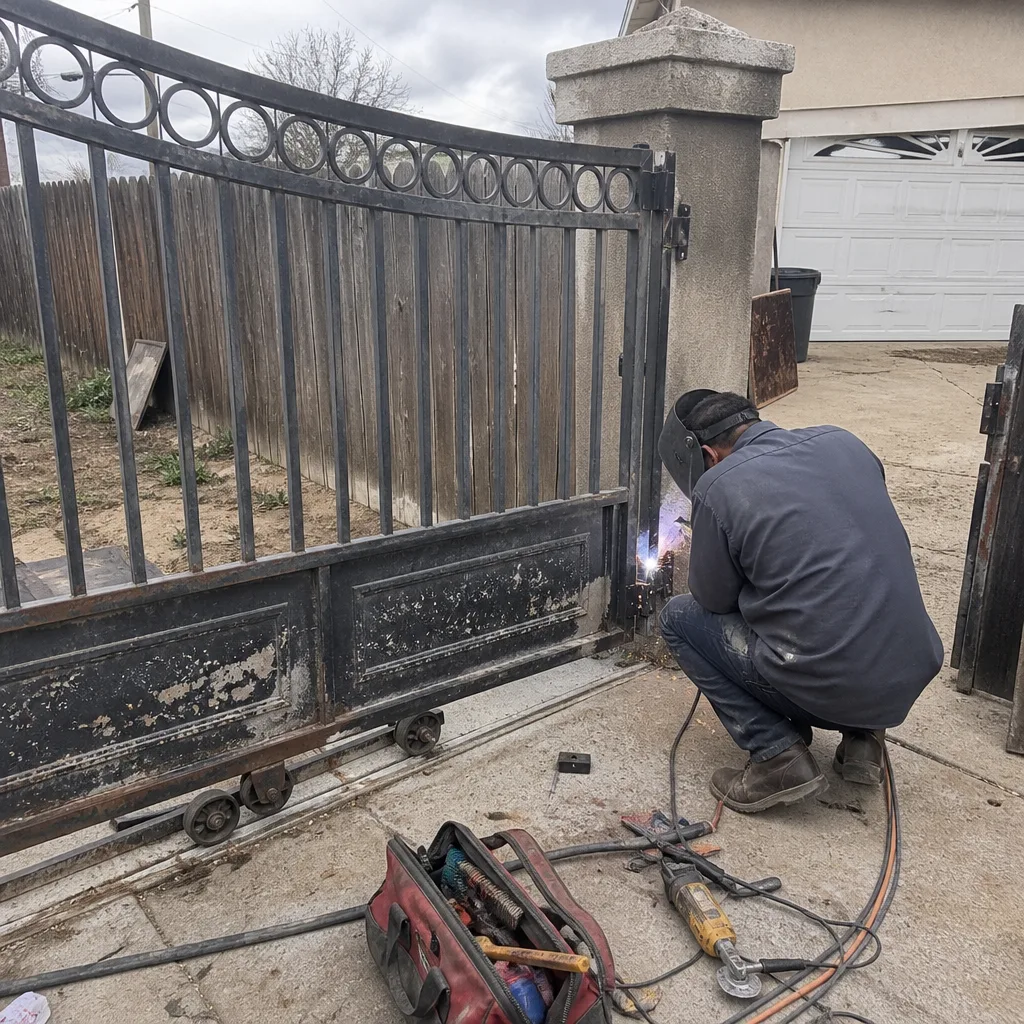 Before
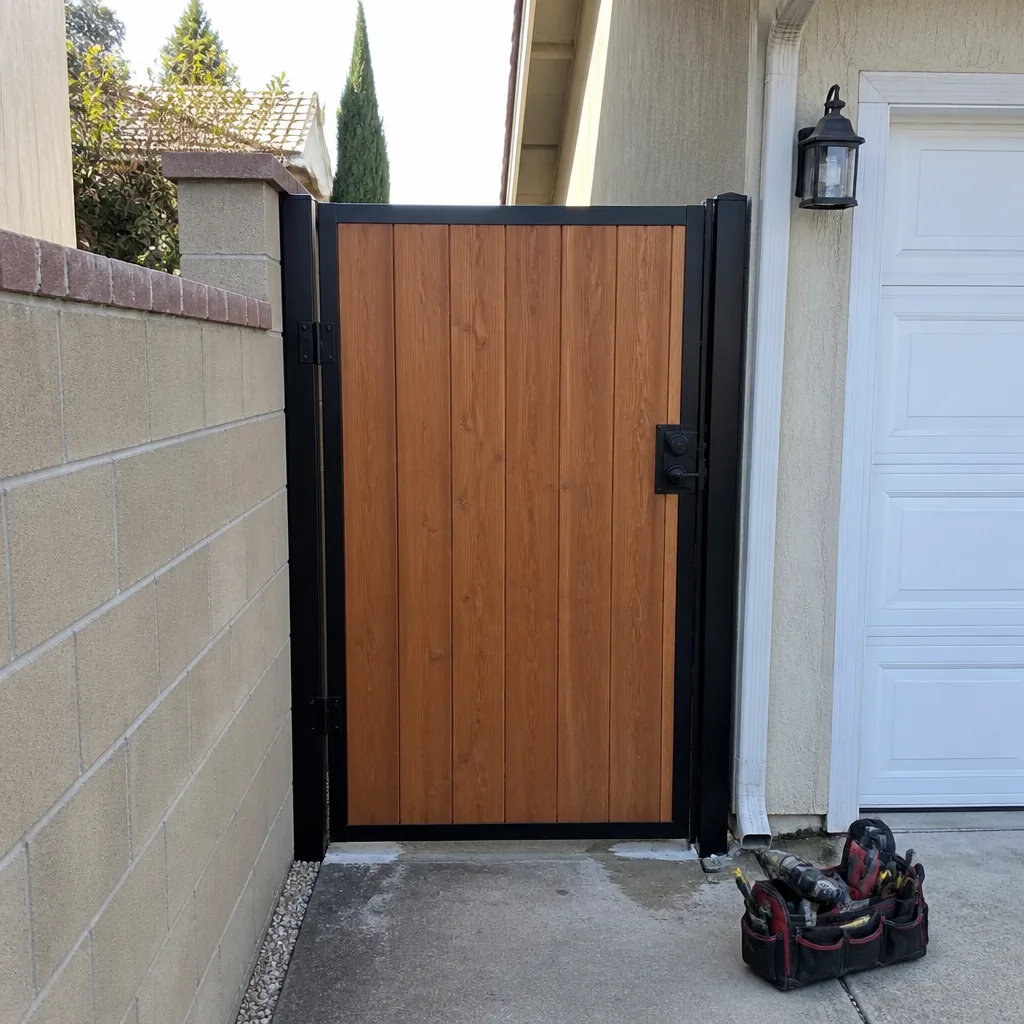 After
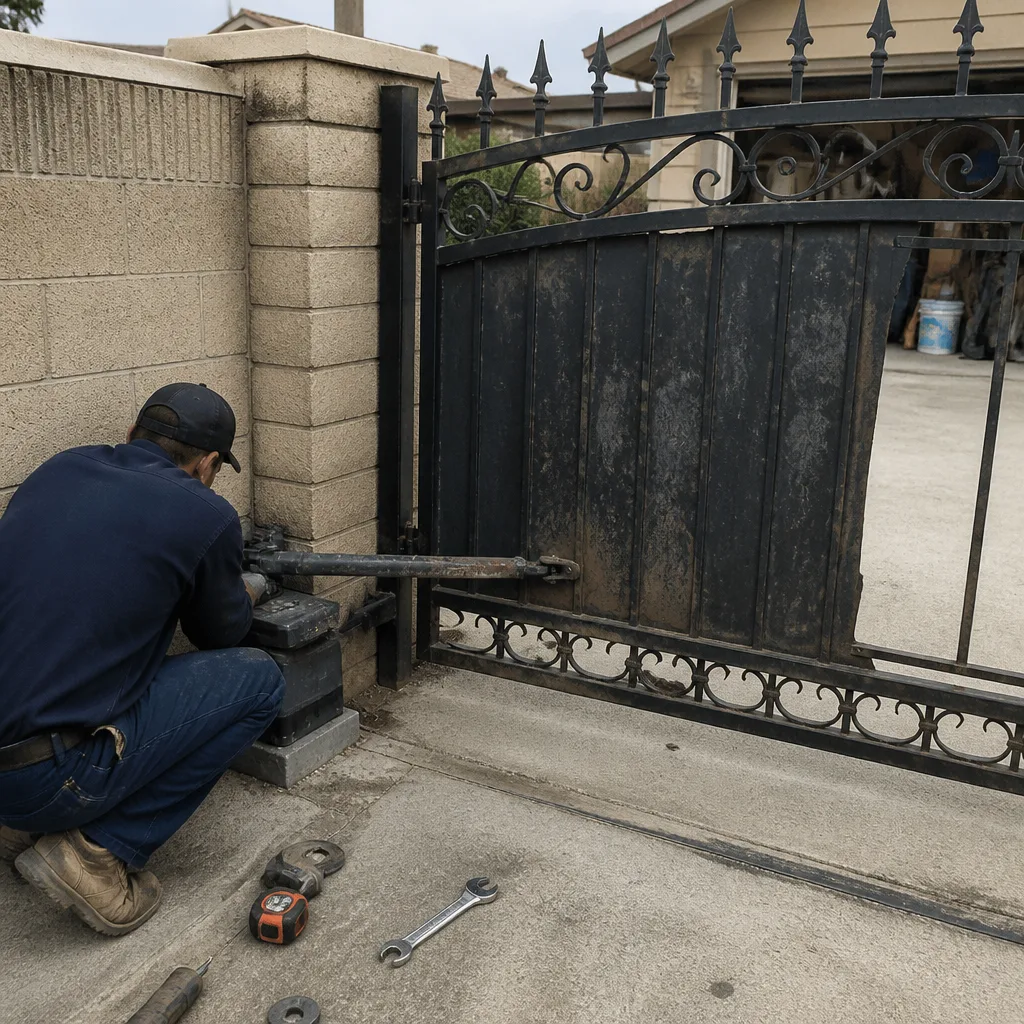 Before
 After
 Before
 After