
Last updated October 31, 2026
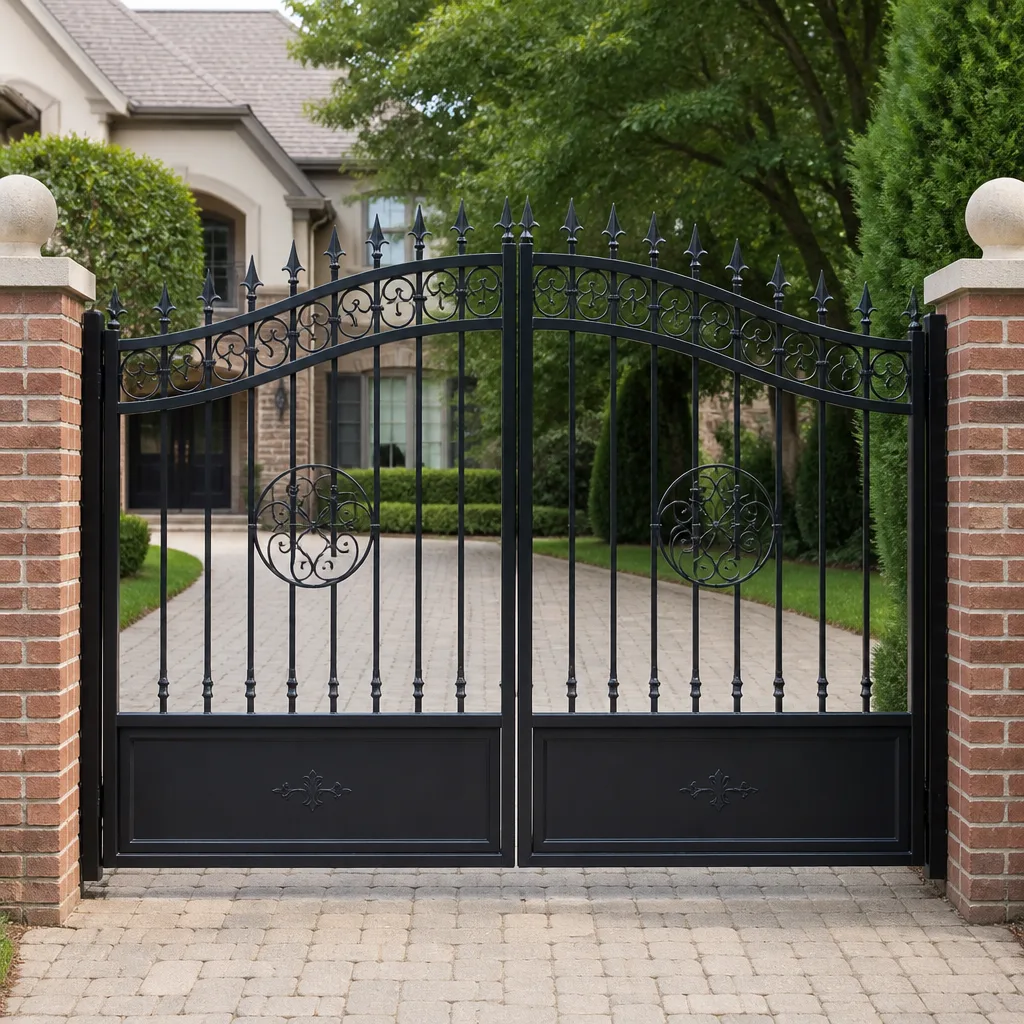 Wrought iron
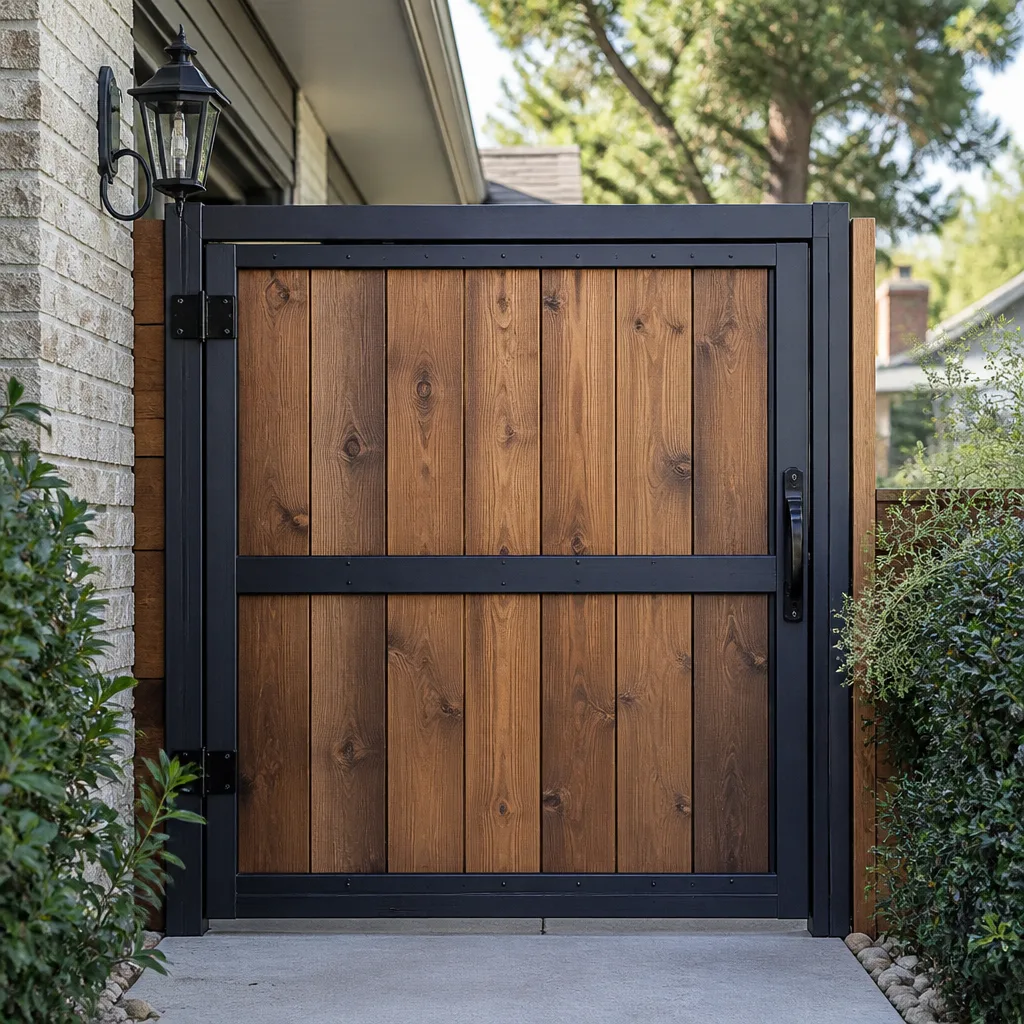 Wood & steel frame
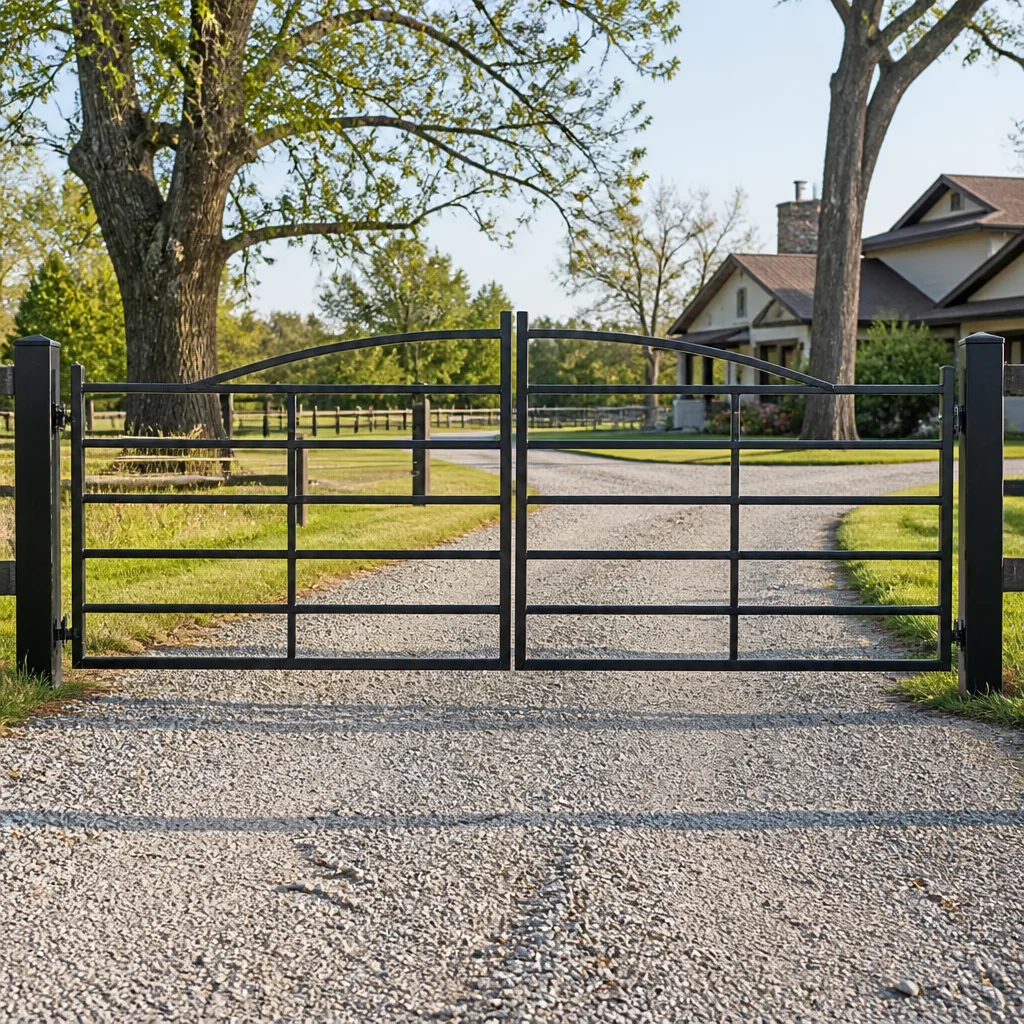 Farm & ranch
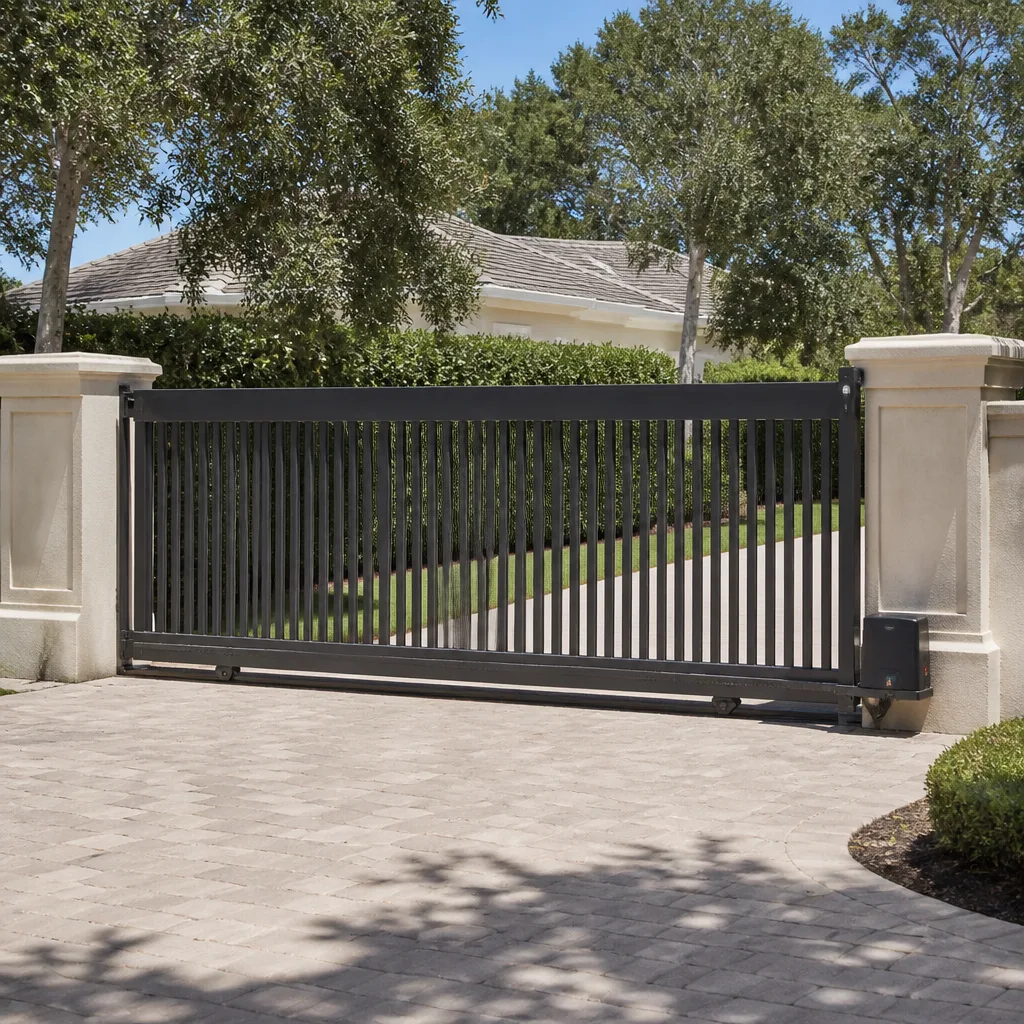 Sliding driveway gates
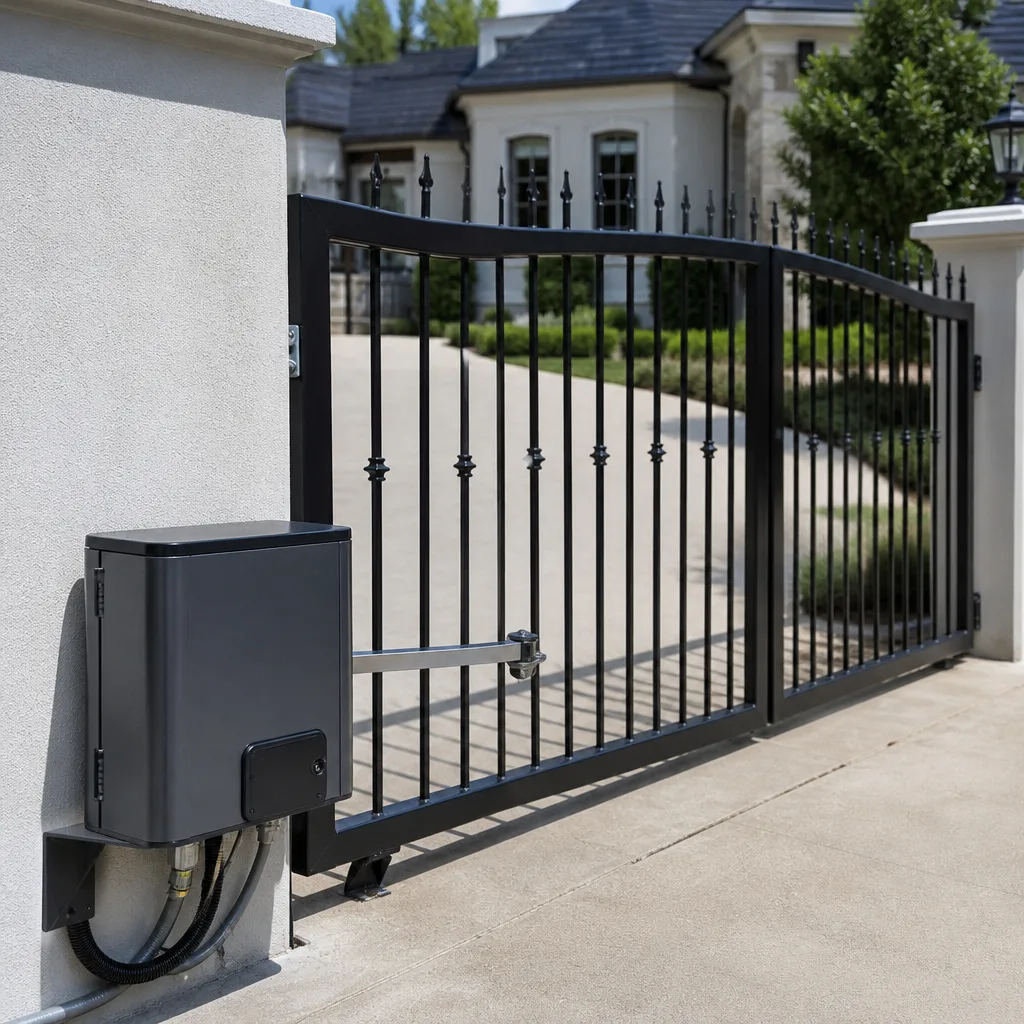 LiftMaster operators
Free on-site gate assessment - hinges, posts, and your LiftMaster or Nice gate operator checked before anything is quoted
The assessment is free and the quote is the invoice.
Get your free estimateThe Complete Gate Repair Guide for Fontana Homeowners
Most gate repair advice is written as if every gate lives in a mild, coastal climate. But a gate installed in Fontana faces roughly 110°F summer temperatures that cause metal to expand and contract daily. That thermal cycling rate alone can loosen hinge bolts and warp gate frames up to three times faster than a comparable installation in, say, Long Beach or Huntington Beach. This guide is different. We’re going to map Fontana’s specific environmental stressors – the heat, the Santa Ana winds, the mineral-heavy water from the Inland Empire’s irrigation systems – to the exact failures they cause, and show you how to diagnose problems before they become a $2,000 replacement. Along the way, you’ll learn the difference between a mechanical fix, an electrical fault, and a board-level issue, so you call the right person the first time.
Quick Answer
Gate repair in Fontana spans three distinct work categories: mechanical (hinges, wheels, tracks, frames), electrical (motors, sensors, wiring, control boards), and structural (posts, welds, alignment). Most Fontana failures start as heat-related mechanical stress – loose hardware, warped frames, dehydrated rollers – that then overloads the electrical system. A full diagnostic from Manor Gate Repair in Fontana identifies the root cause across any brand, including FAAC, BFT, Linear, and Viking, without steering you toward a replacement you don’t need.
Styles & brands we work with
Table of Contents
- Why Fontana’s Climate Breaks Gates Differently
- Manual Swing, Sliding, and Automated: Three Different Repair Worlds
- Hard Water Scale and Fontana’s Underground Track Roller Problem
- Mechanical, Electrical, or Board? How to Tell Before You Call
- The Multi-Brand Repair Problem Nobody Talks About
- Your Seasonal Inspection Checklist for Fontana Gates
- Repair or Replace: A Decision Framework
- Common Mistakes to Avoid
- When to Call a Professional
- Frequently Asked Questions
Why Fontana’s Climate Breaks Gates Differently
Fontana sits in the Inland Empire, where summertime temperatures routinely exceed 100°F and the diurnal swing – the gap between daytime highs and nighttime lows – can be 30 degrees or more. Steel and aluminum gates absorb that heat all day, expand, and then contract sharply after sundown. This is not a subtle effect. A 20-foot steel gate can measurably change length by nearly a quarter inch between 3 p.m. and 3 a.m. On a gate with welded joints, that expansion and contraction works the welds like a fatigue test, and on a bolted gate, it backs out fasteners over a single season.
We see the same pattern every June through October in Fontana neighborhoods like Etiwanda, Sierra Lakes, and Northgate. Homeowners call because their gate has become noisy, or it’s dragging on the pavement, or the latch no longer aligns. Most assume a hinge failed. In reality, the gate frame itself has changed shape permanently – a condition called thermal set – and the hinge is just the first component to complain about it.
Santa Ana winds compound the problem. A wind event that lasts all night can push a 400-pound gate against its posts with sustained force, and if the post bearings are already loose from thermal cycling, the gate moves millimeters with every gust. Those millimeters grind away at hinge pins, wallow out bolt holes, and transfer lateral stress to the operator’s gearbox. The gearbox is the expensive part. By the time a Fontana homeowner notices the gate is slightly out of plumb, the operator has often been absorbing that off-axis load for weeks.
The practical takeaway: after any stretch of 100-degree days or a multi-day Santa Ana event, do a five-minute visual and physical check of your gate hardware. We’ll cover that exact sequence later in the seasonal checklist.
Manual Swing, Sliding, and Automated: Three Different Repair Worlds
One of the most expensive mistakes in gate repair is treating all gates as if the same person can fix them. A handyman who can rehang a sagging wooden gate is not the same technician who can diagnose a failing control board on an automated sliding gate. And a dealer who sells one brand of operator may know that brand thoroughly but be lost outside it.
Manual swing gates
Manual swing gates are structurally the simplest. The typical issues are hinge wear, post lean, sag causing latch misalignment, and occasional weld cracking at the corners of the gate frame. In Fontana’s heat, we also see warped top rails where the sun has heated one side of the gate more than the other – especially on darker-colored gates. These repairs are usually mechanical: weld, straighten, rehang, replace hinges. They’re straightforward but demand correct alignment, because a manual gate that closes poorly is the one a homeowner will force, and a forced gate is a broken post waiting to happen.
Sliding gates
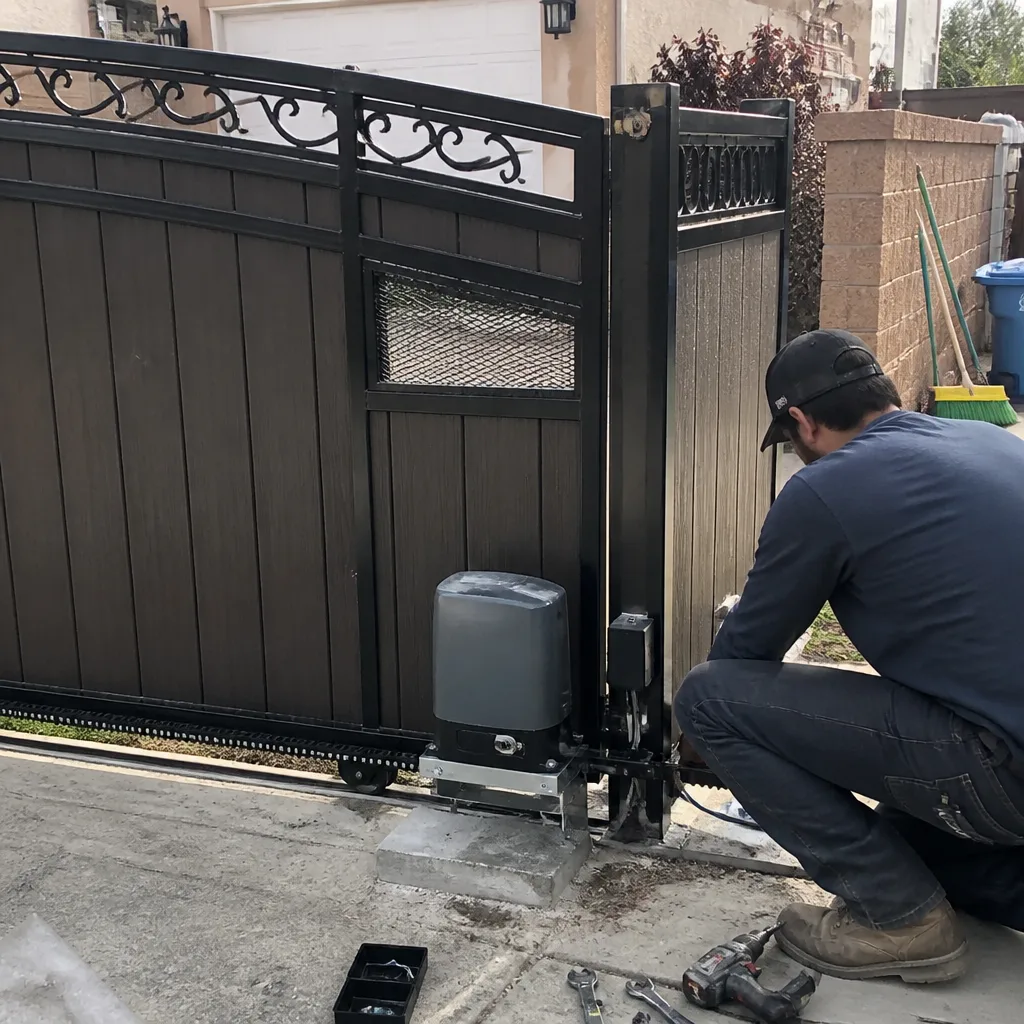
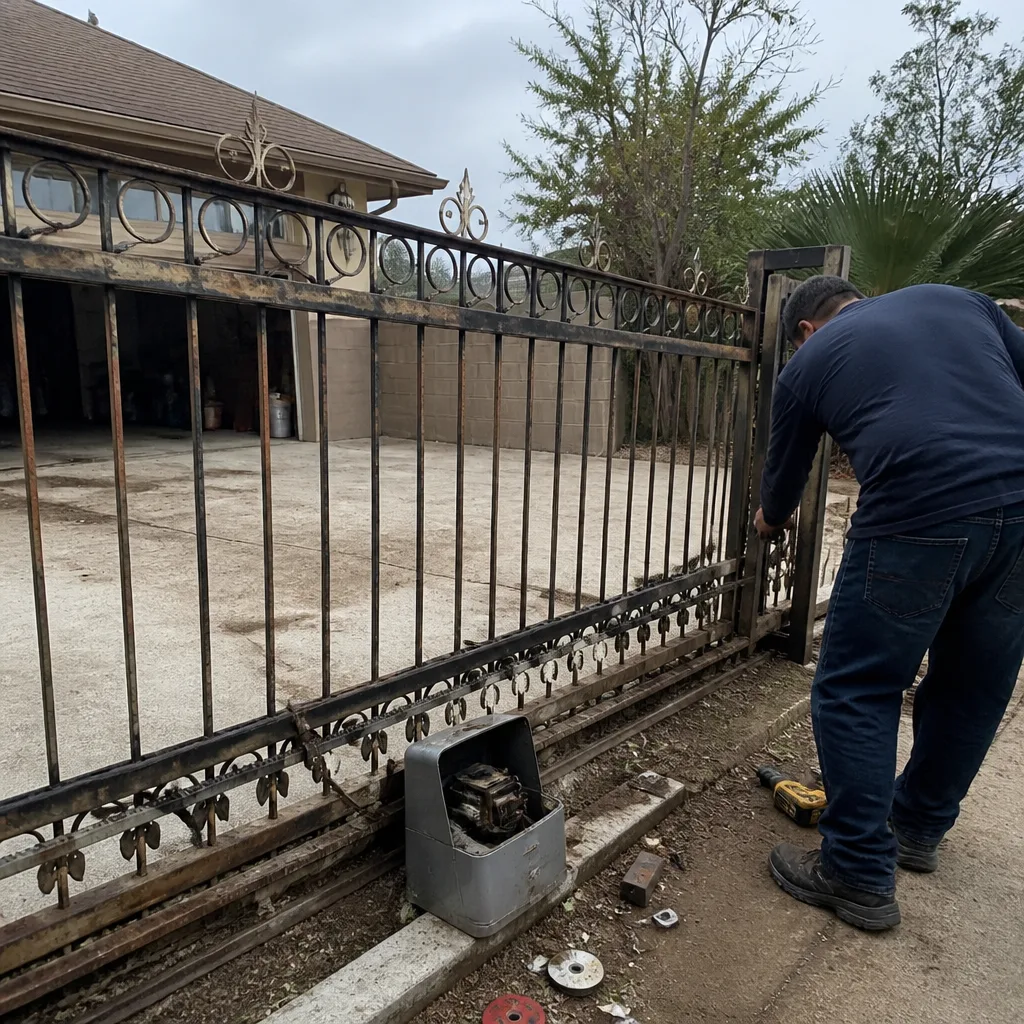
Sliding gates, whether manual or automated, run on wheels or rollers that travel along a track, or they’re cantilevered and ride on rollers set into posts. The load is dynamic – the gate’s full weight moves across a rolling surface every cycle. Wear concentrates at the bottom track, the roller bearings, and the guide wheels at the top. In Fontana, sliding gates accumulate blown dust and fine grit in the track, and when paired with hard water from drip irrigation, that grit cements itself into the roller bearings. We’ve opened bearing housings in Fontana that looked like they’d been packed with sandstone.
Automated systems
Automated gates combine the mechanical wear above with an operator, a control board, safety sensors, sometimes keypads and intercoms, and a power run from the house or a dedicated circuit. The operator is a motor and gearbox working against the gate’s resistance. When the gate’s mechanical side degrades – a stiff roller, a warped frame, a misaligned track – the operator draws more current to compensate. Heat makes it worse: at 110°F ambient temperature, a motor running at higher current can overheat its windings and trip the thermal overload. Many “dead operator” service calls in Fontana are actually mechanical problems that led to electrical failure. That’s why a proper diagnosis starts with the gate, not the box on the post.
If you’re unsure which category fits your gate, the next section will help you identify the failure mode yourself. And for electric gate work specifically, electric gate repair in Fontana is a core specialty of ours, not an add-on service.
Hard Water Scale and Fontana’s Underground Track Roller Problem
The Inland Empire draws much of its irrigation water from the Colorado River and the State Water Project, and that water is hard. Fontana homeowners know what it does to faucets and showerheads. What’s less obvious is what it does to any gate component that sits in the splash zone of landscape irrigation.
Underground track rollers on sliding gates are the worst case. The roller is housed in a box or recessed track at ground level. Irrigation overspray or a misaligned drip emitter keeps the area perpetually damp. The water evaporates in Fontana’s heat and leaves calcium and magnesium deposits behind – a process that repeats daily, hundreds of times per season. The scale builds up in the roller’s axle and bearing surfaces until the roller no longer spins freely. The gate stops rolling and starts sliding. Metal on metal. The homeowner hears a grinding noise, assumes the track is bad, and often gets quoted for a track replacement, when the actual fix is excavating the roller housing, descaling or replacing the bearings, and correcting the irrigation overspray so the problem doesn’t recur in six months.
This is a Fontana-specific failure mode because the combination matters: hard water plus extreme evaporation. Coastal cities get fog, not 100-degree days. Coastal water is also softer in many districts. A generic repair guide never mentions this, but around here, we know to check the irrigation line before we ever start diagnosing the gate.
Mechanical, Electrical, or Board? How to Tell Before You Call
Knowing what kind of problem you have before you pick up the phone saves diagnostic time and, often, a service fee. Here’s a simple three-step sequence.
- Watch how the gate moves through one full cycle. If it’s noisy, binding, or visibly out of level, you likely have a mechanical problem. If it moves smoothly but won’t open or close on command, that’s electrical or board-level.
- Test the gate manually. Most operators have a disconnect mechanism that allows you to push the gate by hand. If it’s hard to move manually, the operator is fighting a mechanical fault – the fix is mechanical. If it moves easily by hand but refuses under power, the issue is the operator, wiring, or control board.
- Check the operator’s power and status. Is there power at the outlet? Does the board show a blinking or solid status light? A dead board may still have power. A tripped circuit breaker is not the same as a failed transformer. And a low-voltage wiring fault at a sensor or photo eye will often prevent the gate from closing but still allow opening.
This sequence won’t fix your gate, but it gives you a vocabulary for the service call. You’ll be able to say, “The gate moves freely by hand but won’t respond to the remote,” which tells a real diagnostic technician something valuable: skip the hinge inspection, go straight to the operator. In our experience, Fontana homeowners who run through this sequence save a service visit’s worth of diagnostic time, because the technician arrives with the right parts on the truck more often. For a deeper look at electric systems specifically, our full electric gate repair guide for Fontana covers operator and board troubleshooting in detail.
The Multi-Brand Repair Problem Nobody Talks About
Here’s an uncomfortable truth about the gate industry: many repair providers are tied to a single brand. That’s fine if your gate happens to use that brand. But if it doesn’t, the economics push toward replacement. A single-brand dealer arrives at a BFT or Viking site, doesn’t stock parts, doesn’t know the board layout, and the easy answer is, “We can’t get parts for this – you really need a new operator.” Sometimes that’s true. Often it’s not.
We work on the brand you already have. That’s not a marketing slogan; it’s the difference between a brand-agnostic service model and an authorized dealer model. A certified familiarity across major brands – from FAAC’s hydraulic operators to BFT’s control logic, from Linear’s residential line to Viking’s sliding gate packages – means no dead ends. If a board’s relay has failed, we repair or source the relay. If a capacitor is swollen, we replace the capacitor. The right fix, not the easy upsell.
This matters more in a city like Fontana, where the housing stock spans decades and gate installations come from dozens of different builders and spec levels. We see FAAC installations next to Viking installations next to no-name generic boards from builders who installed whatever was in stock that month. A brand-agnostic technician simply diagnoses the fault across all of them. That’s the whole job – and it requires keeping parts, schematics, and programming familiarity across a wide set of manufacturers, which most generalists don’t bother with.
Your Seasonal Inspection Checklist for Fontana Gates
Run through this list twice a year – once in late spring before the heat hits, and once in late fall before the winter rains (and the occasional Fontana wind event). Each item takes under a minute.
- Hinge and bracket bolts. Try to move the gate laterally across its hinge line. Any visible play means the fasteners or hinges are wearing. In our Fontana service area, this is the single most common heat-related failure.
- Bottom rollers and track on sliding gates. Look for scale buildup, grit, and flattened spots on the wheels. If the roller doesn’t spin by hand, address it before the operator burns out.
- Operator gearbox and chain tension. With the gate in manual mode, move it by hand and listen for a rhythmic click or grind from the operator. Slipping chains or worn gears announce themselves as a click, not a grind.
- Photo eyes and safety edges. Wipe the lenses with a dry cloth. Clear leaf litter and check for a steady indicator light. A safety sensor blinking in Fontana’s dust storm season is often just dirty, not failed.
- Post plumb. Stand back and eyeball each gate post against a known vertical reference. Even a half-degree lean shifts the load into the hinges and operator. If it’s moving, call before it leans further – a post that fails in a wind event takes the gate with it.
Do this after any heat wave that lasts more than three consecutive days over 100°F. The thermal cycling is cumulative, and catching a loosened bolt in May is a five-minute repair; catching a sheared bolt in August after the gate drops onto the driveway is a different conversation entirely.
Repair or Replace: A Decision Framework
Every gate eventually reaches a point where repair isn’t the right financial decision. The question is how to know when that point has arrived, and a brand-specific dealer is not always an objective judge.
Here’s the framework we use with Fontana homeowners:
- Repair if the frame is sound and the issue is a component. Hinges, rollers, sensors, gearboxes, boards, even operator motors are replaceable parts. A failed component on a structurally healthy gate is a repair, not a replacement.
- Repair if the gate is less than roughly 15 years old. Most well-built steel or aluminum gates have a structural life well beyond a decade and a half, even in Fontana’s heat. Component replacement keeps them in service.
- Replace if the gate frame itself is rusted through or has multiple cracked welds. When the structural sections are failing in more than one location, welding new metal onto fatigued old metal becomes a losing game.
- Replace if the operator is obsolete and the gate is also failing. An operator from the 1990s with no available boards plus a sagging gate frame equals two problems adding up to a new system.
- Always get a repair quote before a replacement quote. If a provider only quotes replacement, you haven’t received a diagnosis; you’ve received a sales pitch. We render a diagnosis first. If repair is viable, that’s the recommendation. If replacement makes more sense, full gate installation in Fontana is a regular part of our work too – the same team, from diagnosis to installation.
One more Fontana-specific note: if your gate was installed by a production homebuilder in the 2000s or 2010s, many of those builders used lighter-gauge steel than you’d find in a custom estate gate. Those gates are more prone to frame fatigue, not just component wear. It doesn’t mean automatic replacement, but it does mean watching the welds more closely than a homeowner with a heavy custom gate would.
Common Mistakes to Avoid
- Greasing everything in sight. Many homeowners respond to a noisy gate by spraying white lithium grease on hinges, rollers, and even the track. On a sliding gate, grease captures Fontana’s fine dust and creates a grinding paste. Dry lubricants for rollers; grease for sealed bearings only.
- Ignoring a slowing gate. If your automated gate takes noticeably longer to open than it did a year ago, the motor is working harder against increased resistance. Waiting until it stops entirely usually converts a mechanical repair into a motor or board replacement.
- Replacing the operator before fixing the gate. As described above, a binding gate destroys a new operator the same way it destroyed the old one. Fix the mechanical side first, then the operator.
- Letting irrigation splash the track. In Fontana, that means hard water scale in the roller housing, and the repair is more involved than adjusting a sprinkler head.
- Buying a new remote or keypad before testing the board. A gate that won’t respond may have a failed receiver on the board or a low-voltage wiring short, not a dead remote. Test before replacing accessories.
- Forcing a manual gate that sticks. A gate that won’t close because of a misaligned latch is communicating something. Forcing it bends the gate, snaps the latch, or cracks the post. Identify the misalignment before applying force.
When to Call a Professional
A loose hinge bolt or a dirty photo eye, you can handle yourself. The situations below call for a trained technician. High-tension gate motors and their gearboxes store energy; control boards carry line voltage; a gate that falls or snaps free can cause serious injury. If your gate is heavy enough to need an operator, it’s heavy enough to hurt someone when it fails under load. We don’t recommend DIY repair of any automated component or structural weld. If you hear metal grinding, if the gate leans visibly, if the operator trips its breaker repeatedly, or if the gate moves on its own, call a professional immediately. Manor Gate Repair offers free estimates in Fontana – call (844) 703-6053 and we’ll diagnose before quoting anything.
Frequently Asked Questions
Most mechanical repairs – hinges, rollers, sensor alignment, latch replacement – run between $150 and $400 in the Fontana area. Electric gate repair involving operators or boards typically ranges from $250 to $900 depending on the component and the brand of your system. A full diagnosis with an itemized quote is always quoted and agreed before any work starts. Call (844) 703-6053 for a free estimate on your specific gate.
Yes. We service nine major gate automation brands – LiftMaster, FAAC, BFT, Linear, Viking, Ghost Controls, DoorKing, Elite, and Mighty Mule – and we work on the brand you already have. Our technicians are trained across multiple control platforms and diagnoses, meaning we find the actual fault rather than pointing you toward a brand we’d prefer to sell.
The heat causes metal components to expand and bind more, and the increased friction makes the motor work harder. If the slow-down disappears when temperatures drop, it’s a thermal expansion issue – usually minor. If it persists into fall, you likely have mechanical wear that started as a summer problem and has become permanent. Either way, it’s worth having the gate inspected before the motor overheats.
We handle the full gate lifecycle – repair, electric gate repair, and new installation. Many Fontana clients start with a repair call and later choose us for new gate installation because we already know their property, their operator, and their access requirements.
Stop operating it and inspect the bottom rollers. In Fontana, hard water scale from irrigation overspray is a frequent cause of grinding sliding gates, and continuing to run the gate will score the track and overload the operator. If the rollers are scaled or seized, contact a gate professional before the motor burns out.
Often yes, if the gate frame is sound. Operators, boards, and sensors are replaceable components. We regularly repair and upgrade automated gates in Fontana homes built since the 2000s. Before recommending replacement, a proper diagnostic should confirm whether the fault is the component or the structure – and component-level repairs are almost always more cost-effective.
The Bottom Line
Gate repair in Fontana isn’t a generic trade. The Inland Empire’s heat, wind, and hard water create failure patterns that demand a local understanding, and the mix of gate brands across the city’s housing stock demands a multi-brand diagnostic approach. The practical steps: run your seasonal inspection, identify whether your problem is mechanical or electrical, avoid the irrigation-to-track failure loop, and don’t accept a replacement quote before someone has actually diagnosed the fault. Most failing gates are repairable – often for a few hundred dollars instead of a few thousand. That’s the whole philosophy behind our work: your gate, restored to spec.
Manor Gate Repair serves Fontana homeowners, HOAs, and property managers with professional gate repair, electric gate repair, and installation. For a free estimate, call (844) 703-6053. We work on the brand you already have.
Written by the team at Manor Gate Repair, serving Fontana since 2014.
See the difference
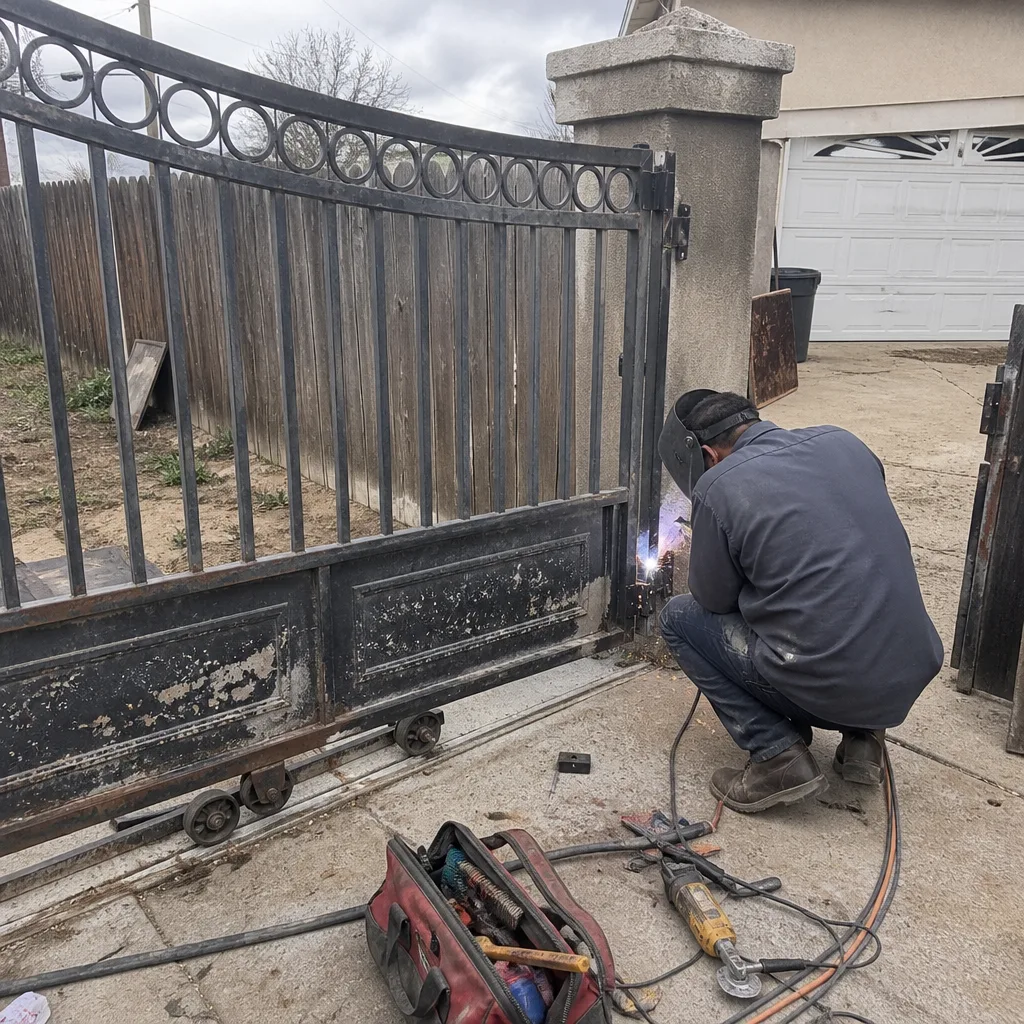 Before
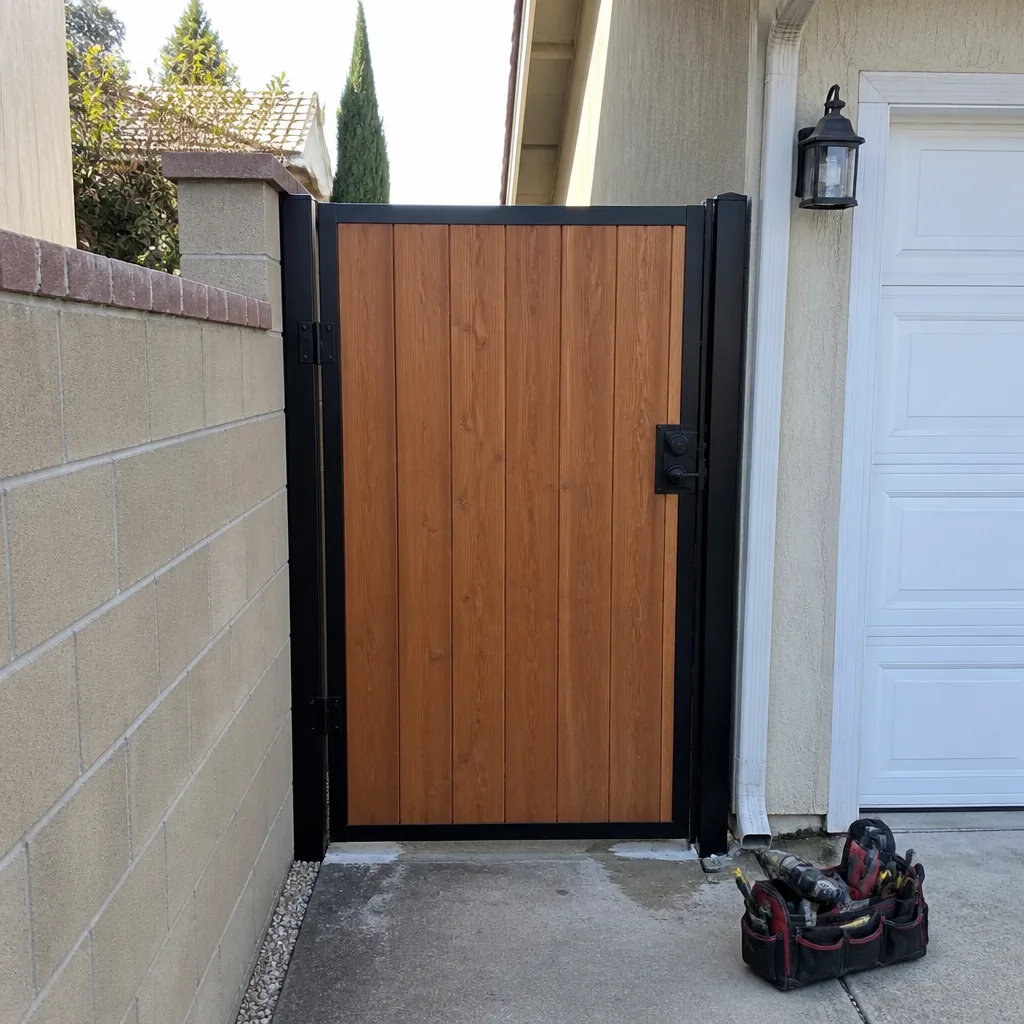 After
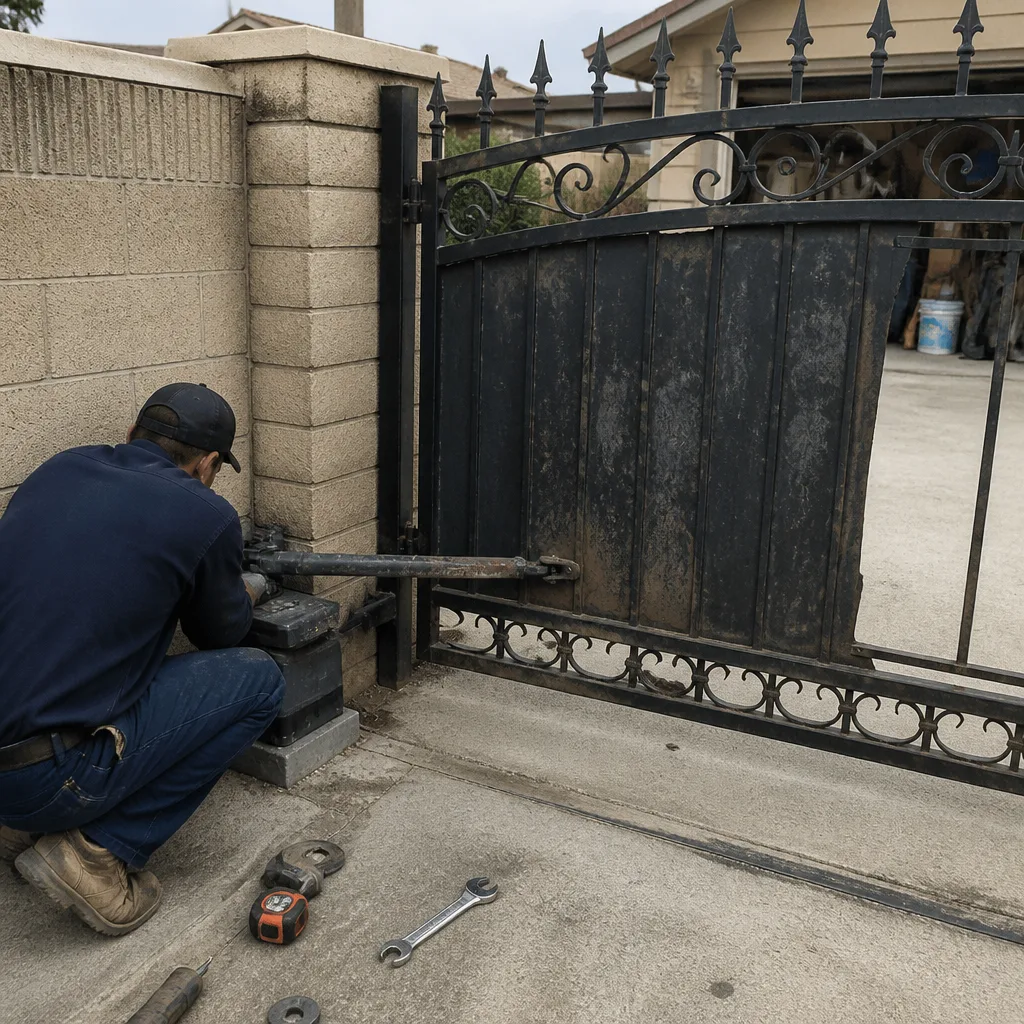 Before
 After
 Before
 After